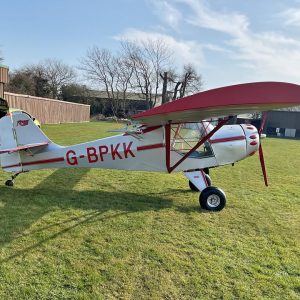
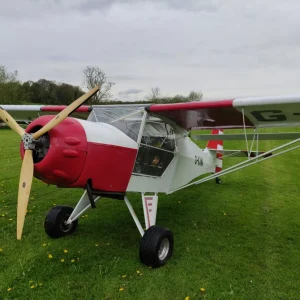
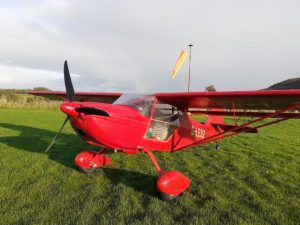
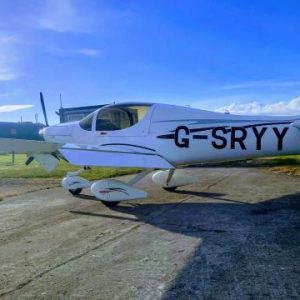
The Kitfox is one of the best-known kit aircraft in the world: a two-seat, high-wing, side-by-side taildragger with a welded steel-tube fuselage, fabric covering and wings that fold back along the fuselage so it can be towed home or squeezed into a small hangar space. More than 4,500 kits have gone to 42 countries since 1984, and the LAA has accepted almost every generation, from the early Mk1 to today’s Series 7.
In the UK the Kitfox appeals to pilots who want an affordable, Cub-like aircraft for grass-strip flying and short hops, with low running costs and the flexibility of LAA Permit ownership. The family covers a very wide spread of weights, engines and performance, so the exact model matters more than the badge.
History and design
Dan Denney’s Denney Aerocraft of Boise, Idaho, developed the Kitfox from the Avid Flyer layout and flew the first Model 1 in November 1984. It was designed to be built in a two-car garage, and the quick-folding wings were a big part of its appeal. Successive models added larger tail surfaces, stronger structure, more power and higher weights. In 1992 the design rights passed to SkyStar Aircraft, which launched the clean-sheet Series 5 and later the Series 6 and 7. After SkyStar went bankrupt in 2005, Kitfox Aircraft LLC took over in 2006 and still sells the Series 7 in Super Sport, STi (short take-off) and Speedster forms.
The wing is a strut-braced high wing that folds back alongside the fuselage. Early aircraft used two-stroke Rotax engines, and from the Model III onward the four-stroke Rotax 912 became the normal fit.
Variants
Mk1, Mk2 and Mk3 (LAA 172): the early lightweight models. The Mk1 typically had a 64 hp Rotax 532, the Mk2 (1989) a Rotax 582 and a bigger fin at 950 lb (431 kg) gross, and the Mk3 larger tail surfaces and the 80 hp Rotax 912.
Mk4, Mk4 (Mod) and Mk4-1200 (LAA 172A): a new laminar-flow wing and improved flaperons. The Mk4-1200 (Classic IV) has stronger struts, gear and spar carry-through, a taller fin and a 1,200 lb (544 kg) gross weight.
Speedster and Mk4-1200 Speedster (LAA 172B): a shorter wing for more speed at the cost of some slow-flying ability.
Mk5 (LAA 172C): SkyStar’s clean-sheet Series 5, available as a taildragger or with a nosewheel. Gross weight started at 1,400 lb and was later raised to 1,550 lb (703 kg) in the US.
Vixen 912 (LAA 172E): the Rotax 912-powered tricycle-gear member of the Series 5 family.
Mk7 (LAA 172D): the current Series 7, with convertible gear, folding wings, a larger elevator and better roll control, and engine options from the Rotax 912 ULS to the 141 hp 915 iS.
Specifications
Two representative models are shown: the Mk4-1200 Classic IV with an 80 hp Rotax 912, and the current Series 7 Super Sport as quoted by Kitfox Aircraft. The Series 7 weights are US experimental figures. Check the LAA TADS and the aircraft’s own documents for the UK limits that apply to a particular airframe.
Specification
Imperial
Metric
Wingspan (Classic IV / Series 7)
32 ft / 31 ft
9.76 m / 9.45 m
Length (Classic IV / Series 7)
18 ft 5 in / 19 ft 8 in
5.6 m / 5.99 m
Width, wings folded (Series 7)
8 ft
2.44 m
Empty weight (Classic IV / Series 7)
650 lb / 750 lb
295 kg / 340 kg
Gross weight, Mk2 / Classic IV
950 lb / 1,200 lb
431 kg / 544 kg
Gross weight, Series 7 (US experimental)
1,550 lb
703 kg
Fuel (Series 7)
27 US gal
102 litres
Engine (Classic IV / Series 7)
Rotax 912 80 hp / Rotax 912 ULS or 912 iS 100 hp, 914 115 hp, 915 iS 141 hp
Vne (Classic IV)
109 kt
203 km/h
Cruise (Classic IV)
96 kt
178 km/h
Cruise (Series 7 Super Sport / STi / Speedster)
107 / 91 / 113 kt
198 / 169 / 209 km/h
Stall (Classic IV)
32 kt
60 km/h
Stall, full flap (Series 7 Super Sport / STi)
36 kt / 28 kt
68 / 51 km/h
Rate of climb (Classic IV / Series 7 Super Sport)
1,200 fpm / 1,000 fpm
6.1 / 5.1 m/s
Take-off roll (Series 7 Super Sport / STi)
290 ft / 150 ft
88 m / 46 m
Landing roll (Series 7 Super Sport / STi)
290 ft / 175 ft
88 m / 53 m
Performance and handling
Performance depends heavily on the model and engine. A two-stroke Mk2 is a gentle, light aircraft that flies much like an ultralight, while a 912-powered Mk4-1200 cruises in the mid-90s of knots, and a Series 7 Speedster is faster again. The STi wing trades cruise speed for very short take-offs and landings. Kitfox Aircraft says its performance figures come from factory demonstrators flown by professional pilots at sea level, so expect a typical UK example to be a little slower.
The early light models are sensitive to gusts and need an ultralight-style approach. Kitfox owners’ guides also note that yaw stability on the Model I to Model IV-1050 was only marginal, which the taller Mk4-1200 fin and the Series 5 improved. Most Kitfoxes are taildraggers, so budget for tailwheel differences training if you do not already have it. Dual brakes are worth looking for if you are new to tailwheel flying.
Owning one in the UK
Every Kitfox in the LAA list is a Group A aircraft, so you need an NPPL SSEA, LAPL(A) or PPL with an SEP rating rather than a microlight licence. UK Kitfoxes fly on an LAA Permit to Fly, with an LAA inspector signing off the annual permit renewal. Running costs are low because owners can do their own maintenance under LAA supervision, and folding wings can cut hangarage costs considerably or allow home storage on a trailer.
Known inspection points from used-Kitfox buying guides include corrosion inside early steel tubing that was sealed in sections, aluminium firewalls on the earliest aircraft, a rudder-pedal strengthening service bulletin on early SkyStar-supplied kits, fuel tanks that were not built for ethanol-blended fuel, and tired bungee gear cords. Check the serial number and model carefully, because some aircraft have been modified or re-plated over the years.
New kits and parts come from Kitfox Aircraft in the USA. The Wikipedia article has a useful model-by-model history. Browse UK aircraft in our listings, see the full list of LAA aircraft, or compare the closely related Avid Flyer and Aeropro Eurofox.
Buying checklist
Identify the exact model (Mk1 to Mk7, Speedster or Vixen) and check that the LAA paperwork, data plate and serial number agree.
Check the steel tube fuselage for internal and external corrosion, especially on early airframes.
Look at the fabric condition and when the aircraft was last recovered.
Confirm the engine type and hours. Two-stroke Rotax 532 and 582 engines need different care from a 912.
Check the fuel tank type and which fuels it is approved for.
Inspect the wing fold fittings, control surface hinges and lift struts, and look for compliance with the early SkyStar rudder-pedal bulletin where relevant.
Ask for the latest weight and balance. Payload varies widely between models and builds.
Check the gear: bungees on older aircraft, and whether a Series 5 or 7 is set up as a taildragger or with a nosewheel.
LAA type acceptance
The Light Aircraft Association lists these variants under the following type numbers. Check the LAA Type Acceptance Data Sheets (TADS) for the current approved engines, propellers and modifications before you buy.
All the LAA-listed Kitfox models are Group A, so you need an NPPL SSEA, LAPL(A) or PPL with an SEP rating.
Can I fly a Kitfox on a microlight licence?
Not the LAA-registered Kitfox models, which are all classed as Group A by the LAA.
Is the Kitfox on a Permit or a CofA?
UK Kitfoxes are amateur-built and fly on an LAA Permit to Fly, renewed each year with an LAA inspector’s sign-off.
What is the difference between the Mk4 and the Mk4-1200?
The Mk4-1200 (Classic IV) has stronger lift struts, landing gear and spar carry-through, a taller fin and rudder, and a 1,200 lb (544 kg) gross weight, compared with 1,050 lb for the Mk4-1050.
What is the Kitfox Vixen?
The Vixen is the tricycle-gear version of the Series 5 Kitfox. The LAA lists the Vixen 912 with a Rotax 912 engine separately as type 172E.
How fast does a Kitfox cruise?
It depends on the model. Kitfox quoted 96 kt for the Rotax 912 Classic IV, and the current Series 7 Super Sport is rated at 123 mph (107 kt) TAS.
Do the wings fold?
Yes. Quick-folding wings have been a Kitfox feature from the start, and the Series 7 is 8 ft wide with the wings folded.
Is the Kitfox a tailwheel aircraft?
Most UK Kitfoxes are taildraggers. The Series 5 and later can be built with a nosewheel, and the Vixen is the tricycle-gear model.
Can I still buy a Kitfox kit?
Yes. Kitfox Aircraft LLC in the USA sells the Series 7 in Super Sport, STi and Speedster forms. Check with the LAA that the model and engine you want are accepted before you order.
How much does a used Kitfox cost in the UK?
Recent UK asking prices on aircraftsale.co.uk ranged from about £9,000 for an early Mk1/2 to £38,000 for a Series 5 with a Rotax 912 ULS (2023-25 asking prices).
What should I check on an older Kitfox?
Look for corrosion inside the steel tubing, aluminium firewalls on very early aircraft, the condition of the fabric and bungee gear cords, and whether the fuel tanks suit modern fuels.
Is the Kitfox good for grass strips?
Yes. It was designed for short, rough-field flying, and the Series 7 STi is a dedicated short take-off version with a 150 ft quoted take-off roll.
Figures are typical published values for a standard example and vary with engine, propeller, build and modification state. Always use the aircraft’s own Pilot’s Operating Handbook, weight and balance schedule and LAA paperwork. Last checked November 2026.