± 25 L/hr (6.6 US gal/hr)Estimate from engine type (Subaru EA81, typical cruise); not verified
Figures marked estimate are approximate, worked out from the engine type or typical values. They have not been checked against the aircraft’s own documents, so don’t use them for flight planning. Check the Pilot’s Operating Handbook or Operating Limitations of the aircraft you are buying.
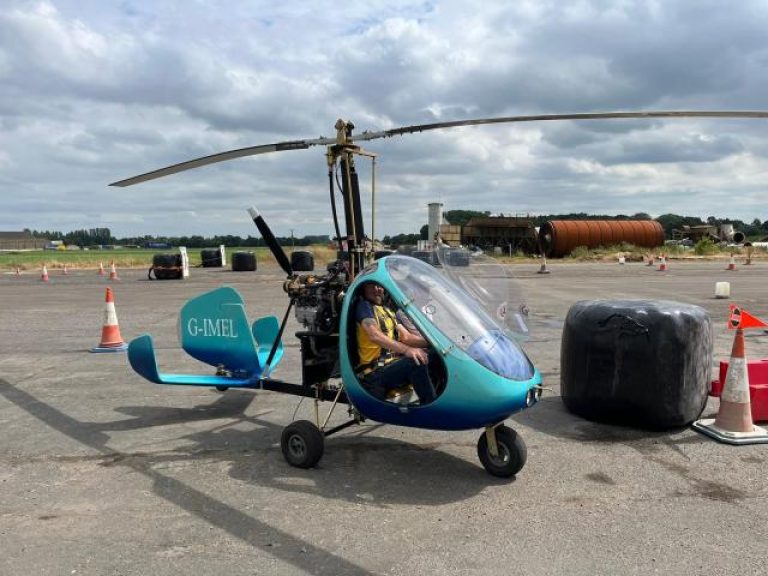
The RAF 2000 is a two-seat, side-by-side kit gyroplane with an enclosed cabin and a car-derived Subaru flat-four driving a pusher propeller. It was one of the first affordable two-seat kit gyros, and a good number were built and flown in the UK, where it appears on the Light Aircraft Association’s type list as gyroplane type G13 (RAF 2000 and RAF 2000 GTX-SE).
For UK buyers its appeal is simple: it is one of the cheapest ways into a two-seat enclosed gyroplane, and used examples change hands for a fraction of the price of a modern factory-built gyro. The trade-off is a type with a well-documented UK safety history and CAA operating restrictions, so this is an aircraft to buy with your eyes open and with a gyroplane instructor who knows it.
History and design
The RAF 2000 was designed by Bernard J. Haseloh as a two-seat development of the single-seat RAF 1000. Rotary Air Force Marketing Inc. produced the kits in Canada. In April 2007 the marketing and manufacturing rights passed to the Mocke family in Upington, South Africa, which now sells the type through RAF South Africa.
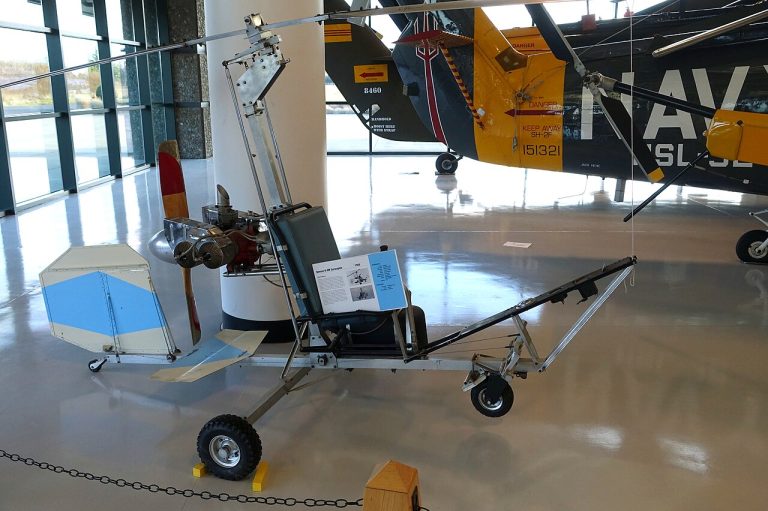
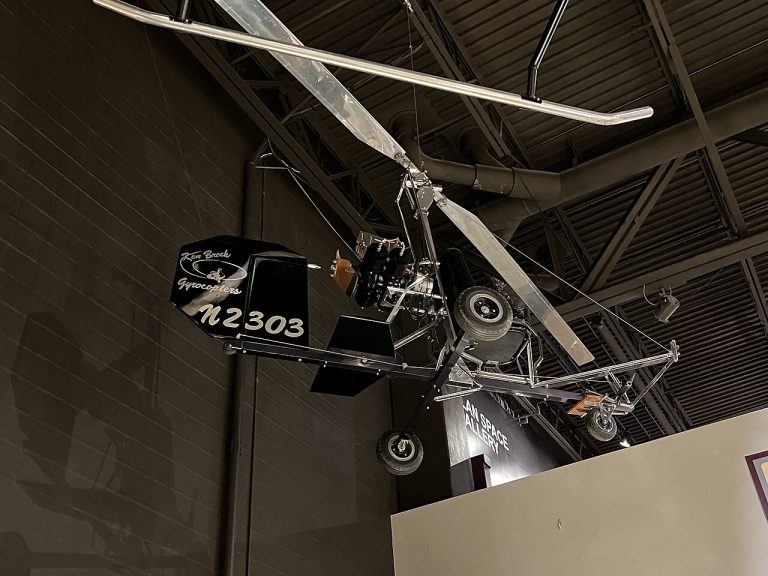
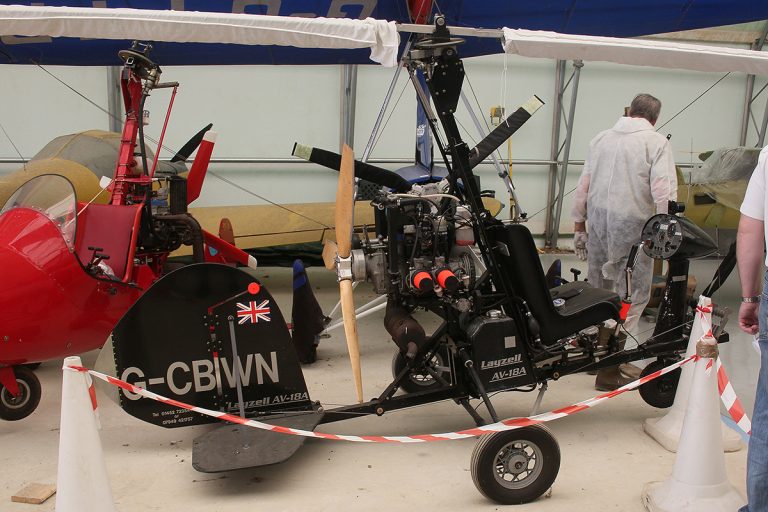
The airframe is a welded and bolted structure with a fully enclosed cabin, a tricycle undercarriage and a mast carrying a two-blade composite rotor with an aluminium spar. Power comes from a liquid-cooled Subaru car engine through a belt reduction drive. Unusually for a gyroplane, the original design has no horizontal tailplane, although aftermarket tailplanes are available.
That design choice matters in the UK. According to the Wikipedia summary of the CAA directives, UK test flying found a tendency to power push-over, where the thrust line sits above the vertical centre of gravity so that adding power pitches the nose down. That raises the risk of the rotor striking the tail.
Variants
RAF 2000 (LAA G13): the basic two-seat kit gyroplane with a Subaru engine.
RAF 2000 GTX-SE (LAA G13): the version most UK examples are registered as, with a 130 hp carburetted Subaru flat-four.
GTX-SE FI and FI 2.5: fuel-injected versions sold by the current maker, with the 2.2-litre (130 hp) or 2.5-litre (165 hp) Subaru. Check whether a particular UK aircraft’s engine is covered by its Operating Limitations.
Specifications
Figures are the manufacturer’s for the fuel-injected 2.2-litre version unless stated. UK limits are set by the CAA directives and each aircraft’s LAA Operating Limitations, which take priority.
Specification
Imperial
Metric
Seats
2 side by side, enclosed
Rotor diameter
30 ft
9.14 m
Length
13 ft 7 in
4.15 m
Height
8 ft 6 in
2.59 m
Width
5 ft 0 in
1.53 m
Empty (dry) weight
790 lb
358 kg
Gross weight (maker)
1,540 lb
698 kg
Fuel capacity
25 US gal
85 litres
Engine
Subaru 2.2-litre flat-four, liquid-cooled, 130 hp, 2.10:1 belt reduction
Propeller
Warpdrive three-blade, ground adjustable, 68 in (1.73 m)
Vne (UK, CAA directive)
70 mph
113 km/h
Cruise (maker)
70–80 mph
113–129 km/h
Rate of climb
1,200 ft/min
6.1 m/s
Fuel burn at 80% power (maker)
4.8 US gal/h
21.8 litres/h
Endurance (maker)
4.6 hours
Take-off roll, one on board (maker)
0–75 ft
0–23 m
Landing roll (maker)
0–10 ft
0–3 m
Performance and handling
The maker quotes a cruise of 70–80 mph and a recommended Vne of 100 mph for the 130 hp version. In the UK, though, the CAA’s Mandatory Permit Directives limit the never-exceed speed to 70 mph for both modified and unmodified aircraft, so UK pilots fly it as a slow, short-field local machine rather than a tourer. Unmodified aircraft also carry a 7 kt crosswind limit for take-off and landing and restrictions on flight in turbulence, according to the same summary.
The maker quotes a take-off roll of up to 75 ft with one on board and a landing roll of up to 10 ft, and lists no stall speed, as is usual for a gyroplane. The dangers are different: low rotor speed on take-off, pilot-induced oscillation in pitch, and the rotor striking the tail or propeller. The AAIB’s reports on this type show each of these. G-REBA (Bodmin Moor, 2006) and G-CBCJ (near Henstridge, 2008) were fatal accidents involving rotor strikes on the tail. G-BXDE (North Weald, 2018) rolled over on take-off with insufficient rotor speed, with the gust lock possibly left engaged.
Owning one in the UK
You need a UK Private Pilot Licence (Gyroplanes), the PPL(G), which is valid only on UK-registered gyroplanes in UK airspace. The CAA’s gyroplane licence page notes that differences training may be needed to move to a different make or configuration of gyro, so budget for conversion training on type. The maker itself recommends at least 45 hours of flight instruction.
UK RAF 2000s are amateur-built aircraft on a Permit to Fly administered by the LAA, which holds a TADS for type G13 in its Gyroplane TADS folder. Since 22 July 2025 gyroplane permits are revalidated through the LAA’s online system, with fees set by weight: £292 for 451–999 kg. The 2009 MPD brought modifications such as a tailplane or rudder centring spring and new doors, and a January 2010 MPD added repeat rotor blade crack inspections, an egress placard, replacement of control components and rudder cable inspections. Make sure every one is recorded as done.
Check that all CAA Mandatory Permit Directives for the RAF 2000 are complete and recorded, including the 2009 and 2010 MPDs.
Read the Operating Limitations: Vne, crosswind limit, doors and any turbulence restrictions.
Ask whether a tailplane or other approved stability modification is fitted, and see its approval paperwork.
Look at the rotor blade inspection records, rotor hours and any blade or teeter-bolt replacements.
Inspect the rudder, rudder cables, control rod ends and the mast for wear, cracks or damage from past rotor contact.
Check which Subaru engine is fitted (carburetted or fuel-injected, 2.2 or 2.5 litre), its history and the reduction drive belt.
For a kit-built example, ask for the build log and the LAA inspector’s sign-offs; for a project, check what is missing.
Arrange conversion training on type with an instructor who knows the RAF 2000 before you fly it.
LAA type acceptance
The Light Aircraft Association lists these variants under the following type numbers. Check the LAA Type Acceptance Data Sheets (TADS) for the current approved engines, propellers and modifications before you buy.
A UK PPL(G), the gyroplane private pilot licence. It is valid on UK-registered gyroplanes in UK airspace, and differences training may be needed when moving to a new make or configuration.
Is the RAF 2000 on a Permit or a CofA?
UK examples are amateur-built and fly on a Permit to Fly administered by the LAA, which lists the type as gyroplane G13.
How fast can it fly in the UK?
CAA Mandatory Permit Directives limit the never-exceed speed to 70 mph in the UK, even though the maker quotes a cruise of 70–80 mph and a recommended Vne of 100 mph.
What engine does it use?
A Subaru car engine through a belt reduction drive. Most UK aircraft are GTX-SEs with the 130 hp 2.2-litre Subaru; the maker also offers fuel-injected 2.2 and 2.5-litre versions.
How much does a used RAF 2000 cost in the UK?
Recent UK asking prices on aircraftsale.co.uk ranged from about £11,000 for an unfinished rebuild to £18,500 for a flying example (2023–24 asking prices).
What fuel does it use and how much?
The maker specifies premium unleaded car fuel and quotes about 21.8 litres per hour at 80% power for the 2.2-litre engine.
Why are there special CAA rules for this type?
UK test flying found a power push-over tendency because the thrust line sits above the centre of gravity. The CAA issued directives restricting speed, crosswind and turbulence and requiring modifications.
Does it have a tailplane?
The original design has no horizontal tailplane, which is unusual for a gyroplane. Aftermarket tailplanes exist, but any fitted to a UK aircraft needs approval.
Is it safe?
The AAIB has investigated several RAF 2000 accidents in the UK, including fatal rotor strikes on the tail in 2006 and 2008. Proper type training, the required modifications and careful pre-rotation technique are essential.
Can I still buy a kit?
The manufacturing rights moved to South Africa in 2007 and the type is still offered there. We did not find a UK agent.
Who looks after the paperwork?
The LAA administers the Permit to Fly. Since 22 July 2025 gyroplane permits are revalidated online, with a £292 fee for aircraft between 451 and 999 kg MTOW.
Figures are typical published values for a standard example and vary with engine, propeller, build and modification state. Always use the aircraft’s own Pilot’s Operating Handbook, weight and balance schedule and LAA paperwork. Last checked November 2026.