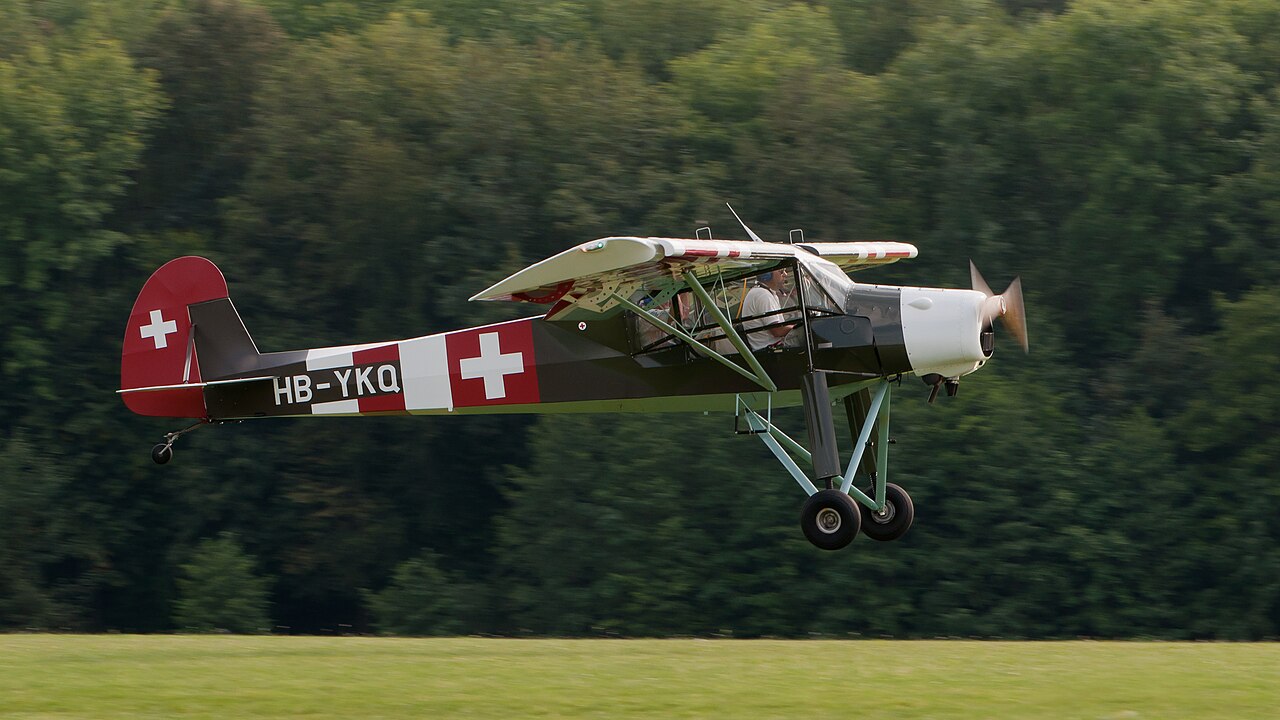
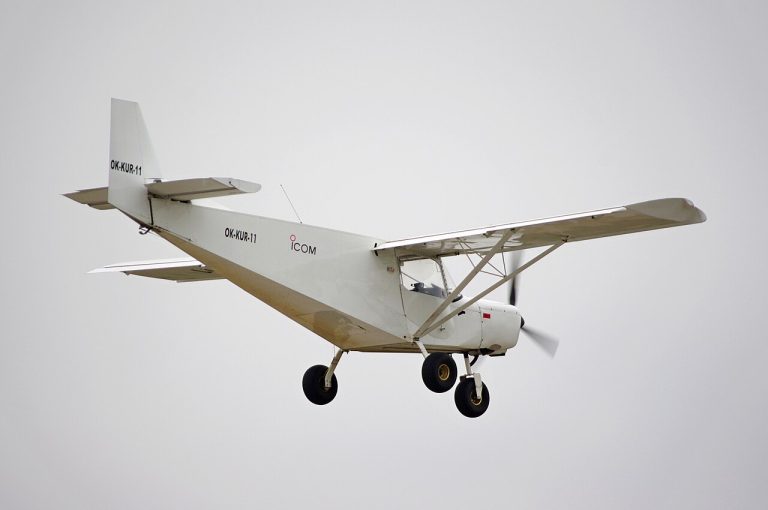
The Slepcev Storch is a roughly three-quarter-scale replica of the Second World War Fieseler Fi 156 Storch, with the original’s long-legged undercarriage, glazed tandem cabin and huge, slow-flying wing, but powered by a modern Rotax. It flies remarkably slowly, with a stall around 22 kt, and can use very short strips.
It appeals to pilots who want a characterful, eye-catching STOL aircraft for farm-strip flying, fly-ins and vintage-style displays. In the UK it is LAA-accepted as a Group A type (LAA type 316) and flies on a Permit to Fly. Only a handful are registered here, so buying one usually means a long search.
History and design
Yugoslav-born Australian designer Nestor Slepcev created the aircraft, which first flew in 1994 according to Wikipedia. It was first built by Slepcev Aircraft Industry at Beechwood, New South Wales, later renamed Storch Aviation Australia, and was type-certified in Australia to JAR-VLA in 1999. Production then moved to Serbia, where Storch Aircraft Serbia developed an FAI microlight version. In August 1996 Slepcev landed a Storch Mk 4 on the Gran Sasso in Italy, the site of the famous 1943 Storch rescue of Mussolini.
The Storch has been sold both as a kit for amateur construction and as a ready-to-fly aircraft. Plane & Pilot reported in a used-aircraft feature that about 150 were flying worldwide. The original Fi 156 had a 240 hp inverted V-8; the Slepcev replica uses far smaller four-cylinder Rotax engines.
Variants
Storch / Storch Mk 4: the standard two-seat replica, sold as a kit or ready to fly, with a 100 hp Rotax 912 ULS or 115 hp Rotax 914. Wikipedia gives a 500 kg gross weight. This is the design covered by LAA type 316; UK example G-BZOB was built in 2004 under PFA serial 316-13592.
Storch Microlight: the FAI-compliant version, given as 450 kg gross with a Rotax 912 ULS. It is not separately listed by the LAA.
Super Storch and Storch Moose: full-scale kits with a 180 hp Lycoming O-360 (862 kg) and a 360 hp Vedeneyev M14P (1,500 kg) respectively. Neither is covered by LAA type 316.
Specifications
Published figures vary widely between versions and sources, so only figures confirmed by more than one source, or clearly attributed, are shown. Figures are for the Rotax 912 ULS microlight version from the World Directory of Leisure Aviation, as cited by Wikipedia, cross-checked against All-Aero’s listing. Check the LAA Operating Limitations for the actual UK weights and speeds.
Specification
Imperial
Metric
Wingspan
32 ft 10 in
10 m
Wing area
160 sq ft
15 m²
Gross weight (Mk 4, Wikipedia)
1,102 lb
500 kg
Gross weight (microlight, Wikipedia)
992 lb
450 kg
Engine
Rotax 912 ULS, 100 hp (Rotax 914, 115 hp, optional)
Cruise
83 mph
72 kt
Maximum speed (Wikipedia)
93 mph
81 kt
Stall
25 mph
22 kt
Performance and handling
The Storch is about slow flight rather than speed. Both Wikipedia and All-Aero give a cruise of about 72 kt and a stall of about 22 kt for the Rotax 912 ULS microlight version, and All-Aero describes a welded chromoly steel-tube fuselage and tail, all-aluminium wings with fuel in the wings, and main gear with about 10 in of travel. Plane & Pilot quoted take-off and landing distances of roughly 50 to 100 ft for a 100 hp example. Climb-rate figures disagree between sources (from about 800 to 1,200 ft/min), so we have not quoted one.
All-Aero also gives a +6/-3 g fuselage rating, a cabin about 2.6 ft wide and 3.3 ft high, hydraulic disc brakes and a Maule tailwheel, and says an optional belly tank was offered for longer endurance. Treat these as indicative, since they come from a compiled listing rather than a current maker’s specification.
Owning one in the UK
You need an NPPL SSEA, LAPL(A) or PPL(A) with tailwheel differences training; LAA type 316 is Group A, not a microlight. Storches here are amateur-built and fly on an LAA Permit to Fly, revalidated each year after an LAA inspector’s check, with maintenance by the owner under LAA oversight. The Rotax 912 ULS is widely supported in the UK, and fuel grades are set by Rotax and the aircraft’s Operating Limitations.
The original Australian company’s website is no longer active, and we did not confirm a current UK agent, so parts support depends on Storch Aircraft Serbia, other owners and the LAA. The AAIB has reported on at least one UK Storch accident (G-BZOB, 2012), which is worth reading before you buy. Compare other STOL types on our Groppo Trail and Zenair CH 701 pages, browse aircraft for sale or see other LAA aircraft.
Buying checklist
Confirm the variant and the LAA-approved MTOW, engine and propeller on the Operating Limitations; published weights range from 450 kg to 550 kg.
Check the weight schedule carefully: useful load is limited, so two adults and fuel may not fit together.
Inspect the long-travel main gear, its shock absorbers and attachment points, and the tailwheel.
Inspect the steel-tube fuselage for corrosion, especially low down at the rear.
Check the aluminium wings, control surfaces and their hinges for damage from rough-strip use.
Review Rotax engine hours, calendar life and service bulletin compliance.
Ask whether the aircraft was built from a kit or delivered ready to fly, and review the build records.
LAA type acceptance
The Light Aircraft Association lists these variants under the following type numbers. Check the LAA Type Acceptance Data Sheets (TADS) for the current approved engines, propellers and modifications before you buy.
An NPPL SSEA, LAPL(A) or PPL(A) with tailwheel differences training. The LAA lists type 316 as Group A, not as a microlight.
Is it on a Permit or a CofA?
UK Storches are amateur-built and fly on an LAA Permit to Fly under LAA type 316. G-BZOB, for example, carries PFA serial 316-13592.
Is it a real Storch?
No. It is roughly a three-quarter-scale replica of the Fieseler Fi 156 Storch, with modern Rotax power.
What engine does it have?
Usually a 100 hp Rotax 912 ULS. Wikipedia also lists a 115 hp Rotax 914 option for the Mk 4.
How slowly can it fly?
Wikipedia and All-Aero both give a stall of about 22 kt (25 mph) for the Rotax 912 ULS version.
How fast does it cruise?
About 72 kt (83 mph), according to Wikipedia and All-Aero.
How short can it take off and land?
Plane & Pilot quoted roughly 50 to 100 ft for a 100 hp example. Real distances depend on weight, wind and surface.
What is the maximum take-off weight?
It varies by version: Wikipedia gives 500 kg for the Mk 4 and 450 kg for the microlight. Check the UK figure on the aircraft’s LAA Operating Limitations.
Can I build one?
The Storch has been sold as a kit and as a ready-to-fly aircraft. Any new UK build must be agreed with the LAA first.
Who makes it now?
Production moved from Australia to Storch Aircraft Serbia. We did not find a current UK agent.
Is it good for touring?
It is slow, cruising at about 72 kt, so it suits local flying, strip flying and fly-ins rather than long trips.
Figures are typical published values for a standard example and vary with engine, propeller, build and modification state. Always use the aircraft’s own Pilot’s Operating Handbook, weight and balance schedule and LAA paperwork. Last checked November 2026.