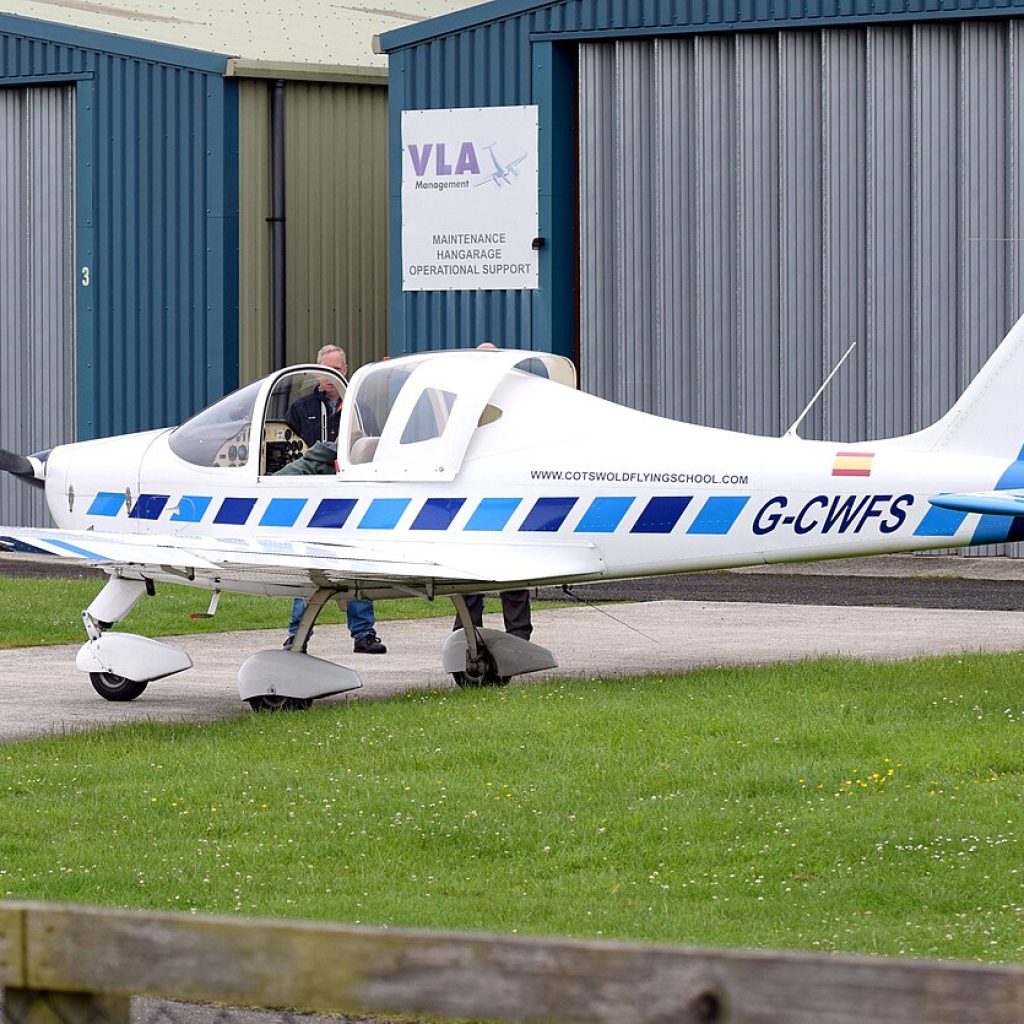
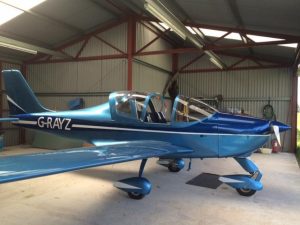
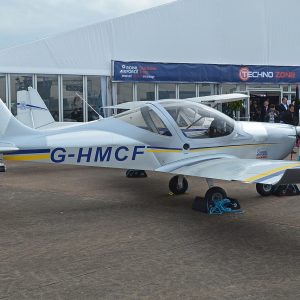
The Tecnam P2002 Sierra is a two-seat, low-wing, all-metal aircraft from Tecnam of Capua, near Naples. In the UK it is found mainly as the P2002-EA, an amateur-built kit version of the type-certificated P2002-JF, and in small numbers as the P2002-RG with retractable undercarriage. Both are administered by the LAA as Group A aircraft on a Permit to Fly.
It appeals to pilots who want a factory-designed, certified-standard airframe with Permit running costs. A Rotax 912 ULS gives a quoted 120 kt cruise at 75% power, the low wing and side-by-side cockpit make it a neat small tourer, and the 100-litre fuel capacity gives genuine touring range. The RG adds retractable-gear interest for those who want it.
History and design
Tecnam began developing the Sierra in 2002 to meet both European very light aircraft rules and US light sport rules. It quickly became an important model for the company, and Tecnam later produced certified fixed-gear (P2002-JF) and retractable (P2002-JR) versions, plus kit versions for amateur building. A later Sierra Mk II brought a revised cabin and avionics.
According to the LAA, the airframe of the P2002-EA is identical to the certified P2002-JF but uses non-certified equivalents for the engine, propeller, instruments, wheels and wiring. The wings, tail and control surfaces are riveted aluminium; the forward fuselage is an aluminium-clad welded steel tube truss and the rear fuselage a riveted aluminium monocoque. The single-spar wing carries a 50-litre fuel tank in each root. Flaps are electric, the all-flying tailplane has an anti-balance tab that doubles as an electric pitch trim, and the EA has fixed tricycle gear with a steerable trailing-link nose leg.
Variants
P2002-EA Sierra / Sierra Deluxe (LAA 333): fixed tricycle gear, Rotax 912 ULS and a GT fixed-pitch wooden propeller. Maximum weight is 580 kg, or 600 kg where approved by LAA Engineering after a flight test and shown on the aircraft’s Operating Limitations.
P2002-RG Sierra (LAA 333A): kit version of the P2002-JR with pneumatically operated retractable gear, an electric in-flight adjustable GT propeller and a 600 kg maximum weight. The mains retract outwards into the wings and the nose leg retracts aft.
Factory-certified P2002-JF and P2002-JR aircraft and the Sierra Mk II are separate, non-LAA versions.
Specifications
Dimensions and performance are Tecnam data as published in Jane’s for the P2002 (LSA standard); UK weights and speed limits are from the LAA.
Specification
Imperial
Metric
Wingspan
28 ft 3 in
8.60 m
Length
21 ft 8 in
6.61 m
Height
8 ft 0 in
2.43 m
Wing area
123.8 sq ft
11.5 m²
Empty weight (Jane’s, LSA)
730 lb
331 kg
UK maximum permitted empty weight
871 lb (EA 580 kg); 915 lb (EA 600 kg, RG)
395 kg; 415 kg
Maximum take-off weight (UK)
1,279 lb (EA); 1,323 lb (EA option, RG)
580 kg; 600 kg
Baggage
44 lb
20 kg
Fuel capacity
22 imp gal (26.4 US gal)
100 litres (2 x 50)
Engine
Rotax 912 ULS, 100 hp (the only engine approved by the LAA)
Propeller
GT-2/173/155 fixed-pitch wood (EA); GT electric in-flight adjustable (RG)
Vne
138 KIAS (EA); 144 KIAS (RG)
256 km/h; 267 km/h
Vno
110 KIAS
204 km/h
Cruise (75% power)
120 kt
222 km/h
Stall (flaps down)
38 kt
71 km/h
Rate of climb
1,220 ft/min
6.2 m/s
Range
590 nm
1,092 km
Take-off run
761 ft
232 m
Landing run
610 ft
186 m
Performance and handling
Tecnam’s figures give a 120 kt cruise at 75% power, a 38 kt stall with flaps down and a climb of about 1,200 ft/min, which is brisk for a 100 hp two-seater. Plane and Pilot’s data for the later Sierra Mk II also lists a 120 kt top cruise and a 38 kt landing-configuration stall, and a range of around 600 nm. Take-off and landing runs of 232 m and 186 m suit most UK grass strips.
In the UK the LAA limits flap travel to 33 degrees, less than Tecnam’s standard for the certified models, to avoid a wing drop at the stall, and test flights include a specific check of stall behaviour at all flap settings, with stall strips set up to suit. Flap limiting speeds are 70 KIAS up to 12 degrees and 67 KIAS beyond that (99 and 68 KIAS at 600 kg). The RG has a gear-extended limit of 70 KIAS. Aerobatics and intentional spinning are prohibited and flight is day VFR only.
Owning one in the UK
Both the EA and RG are SEP (Group A) aeroplanes in the UK, not microlights, so you need an NPPL SSEA, LAPL(A) or PPL(A); the RG will also need any differences training your instructor and insurer require for retractable gear. The aircraft flies on an LAA-administered Permit to Fly, revalidated each year after inspection by an LAA inspector. That keeps costs well below a certified P2002-JF, but budget for LAA fees, the inspection, parts and hangarage.
The Rotax 912 ULS is designed to run on mogas or avgas; follow Rotax and LAA guidance on fuel. Tecnam’s authorised UK parts agent is Oriens Aviation at Biggin Hill, and Tecnam service bulletins are free to download. There are no type-specific LAA Mandatory Permit Directives, but the LAA required a list of modifications for UK acceptance, including seat stop bolts, a stainless steel firewall, an elevator pushrod steady, aileron pushrod reinforcement, fuel tank finger strainers, aircraft-standard rudder turnbuckles, restricted flap travel and a starter-engaged warning light. Tecnam bulletins to check include the seat structure inspection, main gear bolts, exhaust silencer springs and the wing caps inspection. The LAA also notes that the wheel spats help stop the wheel nuts coming loose, so flying without them is not approved unless an alternative locking method is fitted.
Confirm whether the aircraft is an EA or RG and whether its Operating Limitations show 580 kg or 600 kg.
Check the empty weight against the LAA maximum permitted empty weight (395 kg at 580 kg MTOW, 415 kg at 600 kg).
Verify the LAA-required modifications are embodied, especially flap travel restricted to 33 degrees and the stainless steel firewall.
Check Tecnam service bulletin compliance, including seat structure (up to s/n 308) and wing caps (up to s/n 459).
Inspect flap rigging for symmetry, as it affects lateral trim and stall behaviour.
Make sure the wheel spats are fitted and secure, or that an approved alternative wheel nut locking method is in place.
On an RG, test the gear retraction and emergency lowering system and check the retraction lever latch.
Review the Rotax engine records, and check throttle spring adjustment as noted by the LAA.
LAA type acceptance
The Light Aircraft Association lists these variants under the following type numbers. Check the LAA Type Acceptance Data Sheets (TADS) for the current approved engines, propellers and modifications before you buy.
What licence do I need to fly a Tecnam P2002 Sierra in the UK?
The kit-built Sierra is an SEP (Group A) aeroplane, so you need an NPPL SSEA, LAPL(A) or PPL(A). It is not eligible as a microlight.
Is the Sierra on a Permit or a CofA?
The P2002-EA and P2002-RG kit aircraft fly on an LAA Permit to Fly under types 333 and 333A. The factory P2002-JF and JR are certified aircraft and are different.
What is the maximum take-off weight?
The P2002-EA is 580 kg, or 600 kg if LAA Engineering approves it after a flight test and it is shown on the Operating Limitations. The P2002-RG is 600 kg.
How fast is it?
Tecnam’s published data gives a 120 kt cruise at 75% power. The UK Vne is 138 KIAS for the EA and 144 KIAS for the RG.
How far can it fly?
It carries 100 litres in two wing tanks, and Tecnam’s published range is about 590 nm, which is ample for touring in the UK and Europe.
What engine does it use?
The Rotax 912 ULS is the only engine currently approved by the LAA for the EA and RG.
Who supports the Sierra in the UK?
Tecnam’s authorised UK parts agent is Oriens Aviation at London Biggin Hill. Tecnam publishes service bulletins free on its website.
Can I build one?
Tecnam supplied kits that the LAA accepted as meeting the 51% rule, with a build manual and an LAA build inspection schedule. Check with Tecnam or its UK agent on current kit availability.
Is it aerobatic?
No. Aerobatic manoeuvres and intentional spinning are prohibited.
Why is flap travel limited in the UK?
The LAA requires flap travel to be restricted to 33 degrees to avoid a wing drop at the stall, and each aircraft’s stall behaviour is checked at all flap settings.
Can I fly the Sierra without wheel spats?
Not unless an alternative wheel nut locking method is fitted, because the LAA notes that the spats act as a restraint against the wheel nuts coming loose.
Figures are typical published values for a standard example and vary with engine, propeller, build and modification state. Always use the aircraft’s own Pilot’s Operating Handbook, weight and balance schedule and LAA paperwork. Last checked November 2026.