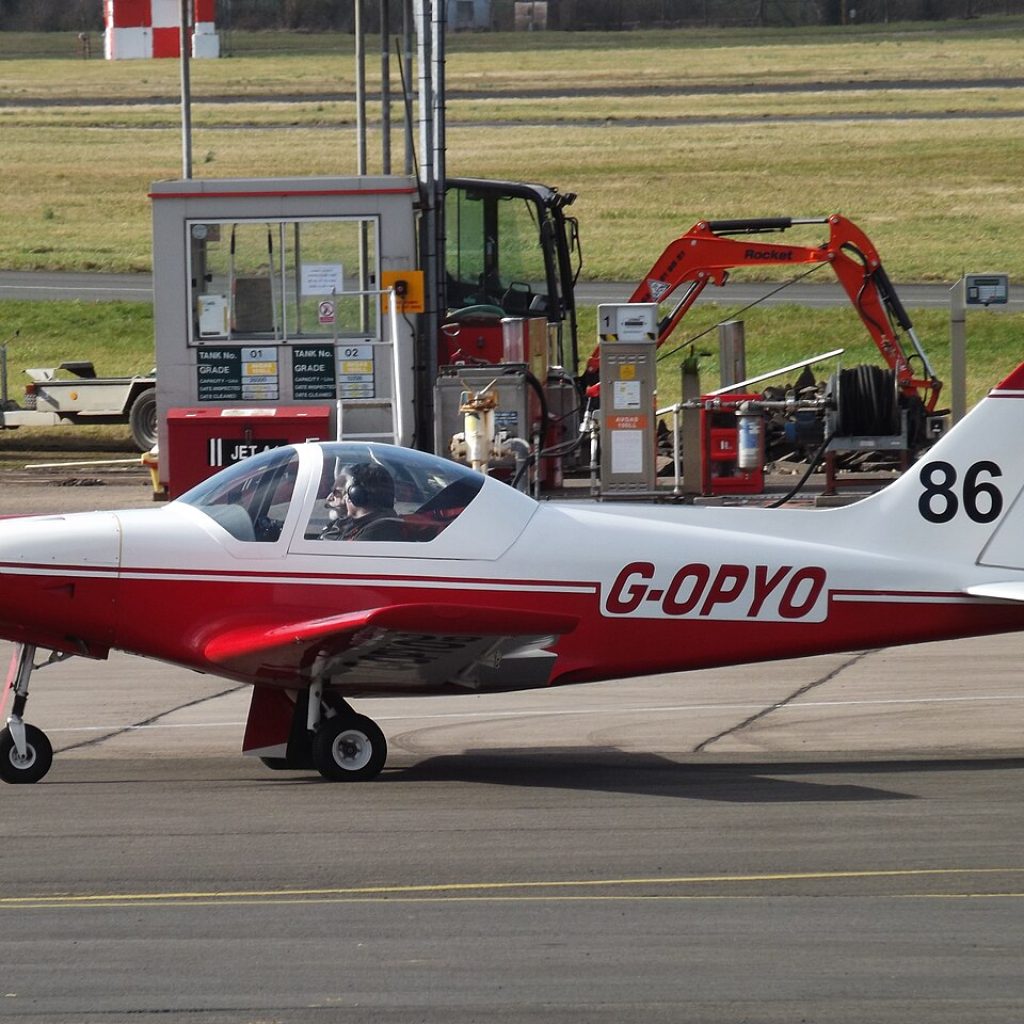
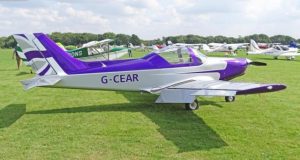
The Alpi Pioneer 300 is a sleek Italian two-seater with a low wing, a Rotax 912 ULS up front and an electrically retracting tricycle undercarriage. It was built as a fast, economical tourer, and it does that job well: a 100 hp aircraft that cruises at around 135 kt is unusual in the light sport world.
In the UK the Pioneer 300 and the later Pioneer 300 Hawk are LAA Group A types flown on a Permit to Fly. They suit pilots who want genuine touring speed on a Rotax budget and are happy to look after a retractable gear system. Buyers should go in with their eyes open, because the landing gear has been the subject of several AAIB reports and an LAA letter to owners.
History and design
Alpi Aviation of Pordenone, in north-east Italy, developed the Pioneer 300 from the Asso V Champion. It was designed to meet the FAI microlight rules and the American light-sport rules, and has been sold both as a kit for amateur construction and as a complete aircraft. Alpi later added the fixed-gear Pioneer 300 FG, the Griffon luxury version, a Rotax 914 Turbo model and the aerobatic Pioneer 330 Acro, but only the Pioneer 300 and the Pioneer 300 Hawk appear on the LAA type list.
The airframe is largely wooden, with composite skin panels on the fuselage. The cabin seats two side by side under a large canopy, and fuel is carried in the wings. The undercarriage is the defining feature: an electrically operated retracting tricycle gear in which each main leg has an upper strut, a hinged swinging leg and a damper that provides the suspension. UK kits were built under the PFA (now LAA) system, and the UK examples in AAIB reports carry PFA 330 serial numbers.
Variants
Pioneer 300 (LAA 330, Group A): the original retractable-gear model with the 100 hp Rotax 912 ULS. Every UK example in the AAIB reports we checked used this engine.
Pioneer 300 Hawk (LAA 330A, Group A): an upgraded model with a better canopy and interior, plywood wing skins and oleo strut suspension. The LAA type data sheet title groups it with the Pioneer 300 under TADS 330.
Fixed-gear, turbo and aerobatic Pioneer 300 versions exist abroad, but they are not separate LAA types, so check exactly what you are buying and what its Permit paperwork covers.
Specifications
Figures are the manufacturer’s, as published in the World Directory of Leisure Aviation and quoted by Wikipedia, unless stated. The UK maximum take-off weight is set by the LAA type data sheet and the aircraft’s own Operating Limitations, so check those documents.
Specification
Imperial
Metric
Seats
2 side by side
Empty weight
628 lb
285 kg
Fuel capacity
17.6 imp gal
80 litres
Engine
Rotax 912 ULS, 100 hp (75 kW)
Propeller
Two-blade composite
Undercarriage
Electrically retractable tricycle
Cruise (75% power)
135 kt (155 mph)
250 km/h
Maximum speed
146 kt (168 mph)
270 km/h
Stall
32 kt (37 mph)
60 km/h
Rate of climb
1,600 ft/min
8 m/s
Performance and handling
The Pioneer 300’s big selling point is speed for the power. Alpi’s data gives a cruise of 250 km/h (about 135 kt) at 75% power, and a second compilation of Alpi figures agrees, though owners should expect a little less on a heavy or older aircraft. That puts it in the same bracket as many 160 hp four-seaters while burning Rotax quantities of fuel. The quoted stall speed of about 32 kt is low for such a clean aircraft. Treat both figures as the manufacturer’s, because the weight and propeller fitted make a real difference.
Being a retractable, the Pioneer asks more of its pilot than a fixed-gear Rotax two-seater. The gear must be lowered and checked on every approach, and the AAIB has recorded cases where a main leg would not lock down and the pilot had to land with the gear partly extended. It is not an aerobatic aircraft: Alpi built the separate, strengthened Pioneer 330 Acro for that role. The AAIB’s reports on nose gear damage point to the risk of wheelbarrowing, so fly a proper hold-off and land on the mains first.
Owning one in the UK
Both UK variants are LAA Group A aircraft, so you need an NPPL with an SSEA rating, a LAPL(A) or a PPL(A) with an SEP rating. The aircraft flies on an LAA-administered Permit to Fly, revalidated every year after an inspection by an LAA inspector, which keeps annual costs well below those of a certified aircraft. The mostly wooden airframe is best kept in a hangar.
Airworthiness attention has focused on two areas. In March 2024 the LAA issued Mandatory Technical Directive MTD-02-2024 after a Pioneer 300’s elevator trim tab control horn failed in flight and caused severe tab flutter. It requires all Pioneer variants to have the horn checked against the correct design standard and recommends regular checks for trim system free play. The landing gear is the second area. AAIB reports describe a cracked right main gear leg that collapsed on landing (G-CEIX, 2016), a nosewheel and fork that separated in overload (G-CFUE, 2017) and a main swinging leg that failed beside its weld to the pivot tube while taxiing (G-IPKA, 2022). In 2019 the LAA wrote to all Pioneer 300 owners recommending inspection of the hinge area for cracks, a gear retraction check every 25 hours with the legs unloaded, more frequent checks for aircraft on bumpy strips, and a thorough check after any heavy landing or touchdown with drift.
Confirm whether it is a Pioneer 300 or a 300 Hawk, and check the LAA type number, MTOW and limits on the Operating Limitations.
Check that MTD-02-2024 (elevator trim tab control horn) has been complied with and recorded in the logbook.
Have an inspector look closely at the main gear swinging legs and pivot tube welds for cracks and internal corrosion, and at the nose leg and fork.
Ask for evidence of regular gear retraction checks and of any heavy or drifting landings and the inspections that followed.
Check the gear indication, circuit breaker and manual extension system all work as intended.
Find out where it has been based: rough grass strips load the gear harder.
Check the wooden structure and composite skins for damp, delamination or hangar rash, and ask how it has been stored.
Check the Rotax 912 ULS hours and maintenance history, including the propeller.
LAA type acceptance
The Light Aircraft Association lists these variants under the following type numbers. Check the LAA Type Acceptance Data Sheets (TADS) for the current approved engines, propellers and modifications before you buy.
It is an LAA Group A aircraft, so you need an NPPL with an SSEA rating, a LAPL(A) or a PPL(A). It is not a microlight in the UK.
Is the Pioneer 300 on a Permit or a CofA?
UK examples fly on an LAA-administered Permit to Fly under type 330 (Pioneer 300) or 330A (Pioneer 300 Hawk), renewed each year after an LAA inspection.
How much does a Pioneer 300 cost in the UK?
Recent asking prices on aircraftsale.co.uk were £49,500, £49,950 and £55,000, so expect roughly £50,000 to £55,000 for a flying example.
How fast does it cruise?
Alpi quotes 250 km/h (about 135 kt) at 75% power on the 100 hp Rotax 912 ULS.
What engine does it use?
The UK aircraft use the 100 hp Rotax 912 ULS. Alpi offered turbocharged and aerobatic models abroad, but these are not separate LAA types.
What is the difference between the Pioneer 300 and the Hawk?
The Hawk has an improved canopy and interior, plywood wing skins and oleo strut suspension. Both are covered by the LAA’s TADS 330.
Is the landing gear a problem?
It needs care. The AAIB has reported several gear failures, and the LAA has advised owners to check the main gear hinge area for cracks and carry out a retraction check every 25 hours.
Are there any mandatory directives?
Yes. LAA MTD-02-2024, issued in March 2024, requires the elevator trim tab control horn on all Pioneer variants to be checked after an in-flight failure caused severe tab flutter.
Can I operate it from a grass strip?
Many UK Pioneers fly from grass, but the LAA recommends more frequent gear checks for aircraft using bumpy strips, and the AAIB has linked rough surfaces to gear cracking.
Is it aerobatic?
No. Alpi built a separate, strengthened model, the Pioneer 330 Acro, for aerobatics, and it is not on the LAA type list.
Does it need a hangar?
The airframe is largely wooden with composite skins, so a hangar is strongly advisable to protect it from damp and weather.
Figures are typical published values for a standard example and vary with engine, propeller, build and modification state. Always use the aircraft’s own Pilot’s Operating Handbook, weight and balance schedule and LAA paperwork. Last checked November 2026.