± 8 L/hr (2.1 US gal/hr)Estimate from engine type (VW conversion 40 hp, 65% power); not verified
Figures marked estimate are approximate, worked out from the engine type or typical values. They have not been checked against the aircraft’s own documents, so don’t use them for flight planning. Check the Pilot’s Operating Handbook or Operating Limitations of the aircraft you are buying.
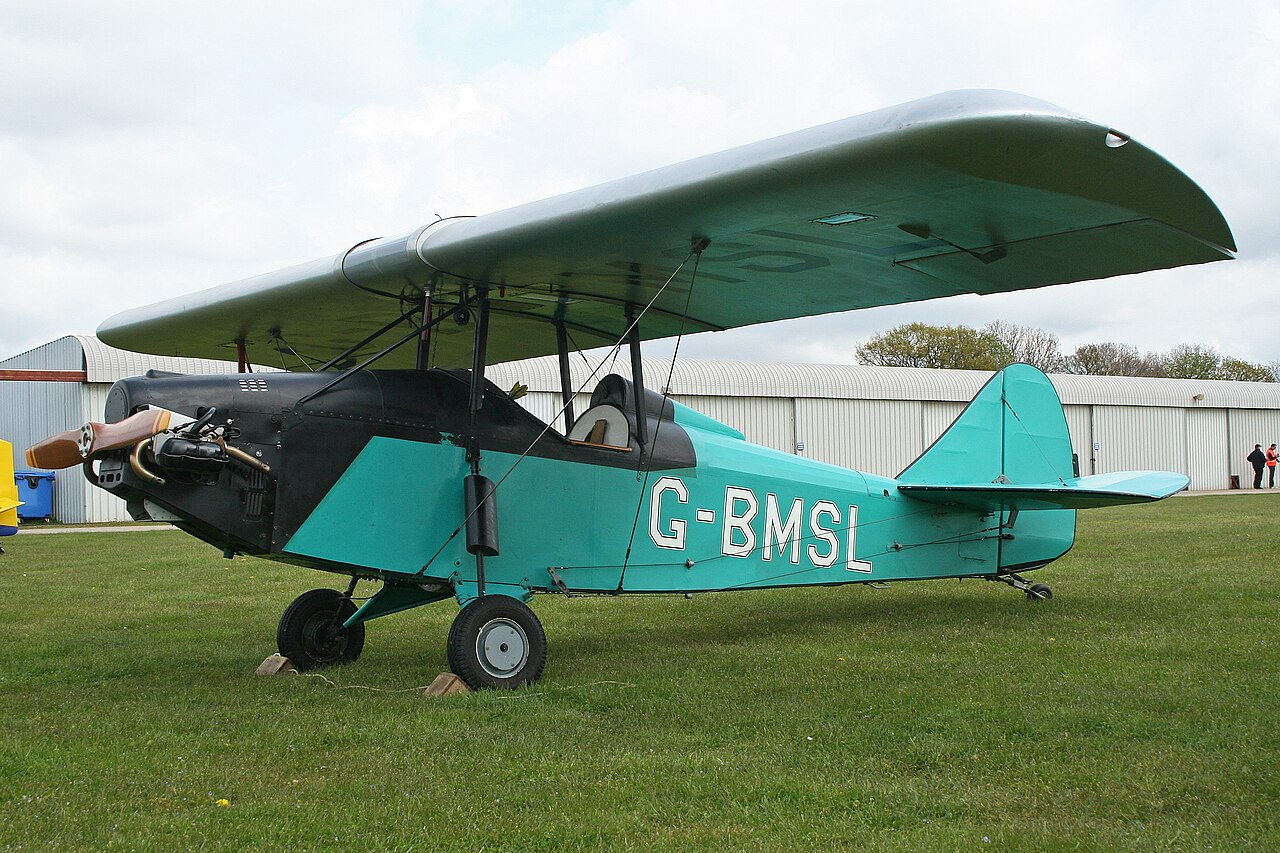
The FRED, short for Flying Runabout Experimental Design, is a British single-seat parasol monoplane designed by Eric Clutton in Stoke-on-Trent and sold as plans for amateur builders. It is a simple wood, plywood and fabric aeroplane with an open cockpit, a tailwheel and wings that fold back alongside the fuselage, so it can be towed on its own wheels and kept in a garage or trailer.
It is a slow, gentle, low-cost runabout rather than a tourer. UK pilots buy one for cheap local flying from grass strips, for the open-cockpit experience, and because folding wings can remove hangar costs altogether. Over 600 sets of plans have been sold and examples have flown in the UK, Australia, Canada, New Zealand and the United States.
History and design
Eric Clutton and E.W. Sherry built the prototype, G-ASZY, between 1957 and 1963, starting in Stoke-on-Trent and finishing at Meir aerodrome, where it first flew on 3 November 1963. It began with a converted Triumph motorcycle engine of about 27 hp and became a flying test bed: over the years it flew with a Scott A2S, a Lawrence radial and, from 1968, Clutton’s own belt-reduced Volkswagen conversions. A Continental A65 was fitted in 1982. Clutton later emigrated to the United States, and the prototype went with him.
The fuselage is a spruce framework with a Warren girder rear section. The wing uses a thick Göttingen 535 aerofoil and a spruce and plywood structure, braced internally by steel rods. The outer panels fold flat against the fuselage; folded, the aircraft is about 4 ft 3 in wide and one person can rig it in minutes without tools. A gravity-fed fuel tank sits in the fixed centre section, and steel spring shock absorbers suit rough strips. Many builders widen the narrow cockpit or round off the tail.
Variants
Series 1: the single prototype, G-ASZY. Not a separate LAA type.
FRED Series 2 (LAA 029, Group A): the plans-built version for amateur builders. Jane’s lists it with a converted 1500 cc Volkswagen engine; most builders have used VW conversions, with the 1835 cc unit said to be the most popular.
FRED Series 3 (LAA 029, Group A): an improved homebuilt version with the 65 hp Continental A65, first flown in December 1982.
Because every FRED is individually built, engines, weights and cockpit widths vary. Each aircraft’s limits are set by its own LAA paperwork.
Specifications
Dimensions and fuel are for the Series 2 from Jane’s All the World’s Aircraft 1971-72 (via Wikipedia). Weights and cruise are the designer’s published figures as carried by the US plans distributor and an aircraft database, with the Jane’s figures noted where they differ.
Specification
Imperial
Metric
Seats
1, open cockpit
Wingspan
22 ft 6 in
6.86 m
Length
17 ft 0 in
5.18 m
Height
6 ft 0 in
1.83 m
Wing area
110 sq ft
10.2 m²
Empty weight
550 lb (Jane’s: 533 lb)
249 kg (242 kg)
Maximum weight
800 lb (Jane’s: 773 lb)
363 kg (351 kg)
Fuel capacity
7.5 imp gal / 9 US gal
34 litres
Engines
Volkswagen conversions (1500-1835 cc) or Continental A65, about 65 hp
The FRED is a slow aeroplane by design. Cruise figures run from about 55 kt with a small VW to about 61 kt in the designer’s figures, and take-off and climb depend heavily on the engine fitted. A KITPLANES feature on the prototype quotes a typical climb of about 700 ft/min with the A65 at 800 lb.
The thick wing gives very docile handling. The same article describes it as stable, able to fly hands-off with its spring trim, and very reluctant to stall, and Clutton once completed a 90-mile cross-country without aileron control. That forgiving nature is a large part of its appeal. It is still a light, open-cockpit tailwheel single-seater, so it is best flown in calm conditions by a pilot current on tailwheel types.
Owning one in the UK
The FRED is an LAA Group A type, so you need an NPPL with an SSEA rating, a LAPL(A) or a PPL(A) with an SEP rating, plus tailwheel differences training. UK aircraft fly on an LAA-administered Permit to Fly, renewed each year after inspection by an LAA inspector, so running costs are low.
Folding wings are the big practical advantage: a FRED can live in a trailer or garage and be towed to the strip, which saves hangar rent. VW-engined aircraft depend on the quality of the engine conversion, so ask who built and maintains it. The Continental A65 is a well-supported classic engine. As a wooden aircraft it needs dry storage and periodic checks of glue joints and fabric. Insurance for a single-seat homebuilt is usually modest; ask a broker familiar with LAA types.
Identify the engine, who converted it (for a VW) and its hours and history.
Check the wing fold hinges, locking pins and the drag-bracing rods for wear and correct rigging.
Have an LAA inspector look at the wooden structure, glue joints and plywood for rot or moisture.
Inspect the fabric and the undercarriage spring shock absorbers.
Check the cockpit width fits you, because builders often modified it.
Ask for the weight and balance schedule and Operating Limitations, since weights vary between builds.
If you plan to tow it, check the condition of any trailer or towing arrangement.
LAA type acceptance
The Light Aircraft Association lists these variants under the following type numbers. Check the LAA Type Acceptance Data Sheets (TADS) for the current approved engines, propellers and modifications before you buy.
Flying Runabout Experimental Design. It was designed by Eric Clutton and is also known as the Clutton-Tabenor FRED.
What licence do I need to fly a FRED?
It is an LAA Group A aeroplane, so you need an NPPL with an SSEA rating, a LAPL(A) or a PPL(A) with an SEP rating, plus tailwheel differences training.
Is the FRED on a Permit or a CofA?
UK examples fly on an LAA-administered Permit to Fly under LAA type 029, which covers the Series 2 and Series 3.
Do the wings fold?
Yes. The outer panels fold back flat against the fuselage, giving a width of about 4 ft 3 in, so the aircraft can be towed on its own wheels and stored in a garage.
What engine does it use?
Most FREDs use a converted Volkswagen engine, with the 1835 cc unit the most popular, while the Series 3 uses the 65 hp Continental A65.
How fast does it cruise?
The designer’s figure is about 70 mph (61 kt). Jane’s gives 63 mph (55 kt) for a Series 2 with a 1500 cc VW, so expect a slow, relaxed aeroplane.
What is the maximum take-off weight?
The designer’s figure is 800 lb (363 kg); Jane’s 1971-72 gives 773 lb for the Series 2. Check the aircraft’s own Operating Limitations.
Can I build a FRED in the UK?
It is a plans-built design. A UK build would be registered with the LAA and overseen by an LAA inspector under type 029.
How does it handle?
It is described as very stable, able to fly hands-off with its trim and very reluctant to stall, thanks to its thick wing.
How much fuel does it carry?
Jane’s gives 7.5 imperial gallons (34 litres) in a gravity-fed centre-section tank.
Is it suitable for touring?
Not really. It is slow, has one seat and an open cockpit, and is best for local flying from grass strips.
Figures are typical published values for a standard example and vary with engine, propeller, build and modification state. Always use the aircraft’s own Pilot’s Operating Handbook, weight and balance schedule and LAA paperwork. Last checked November 2026.