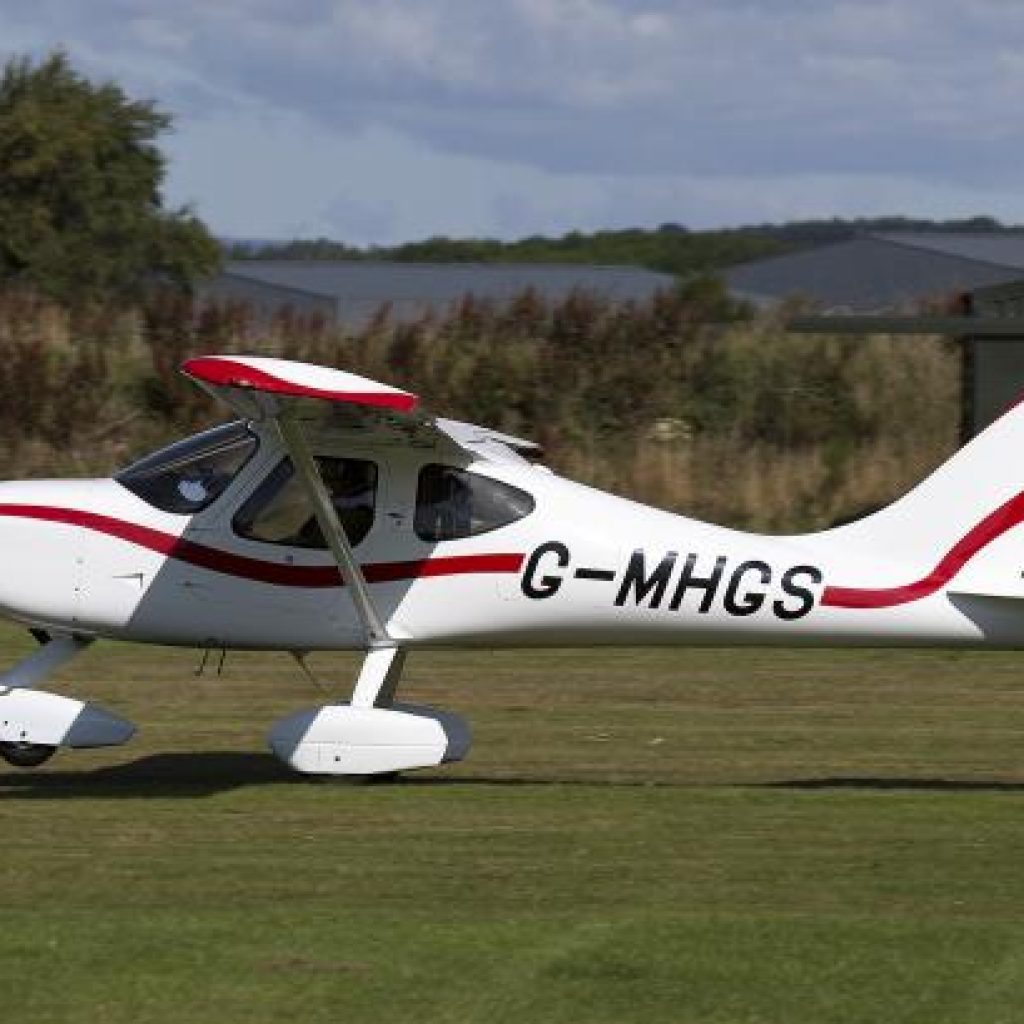
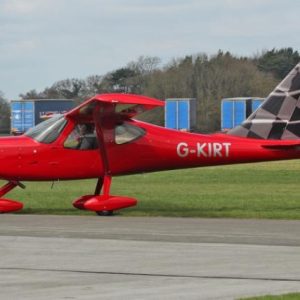
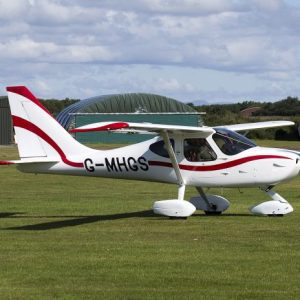
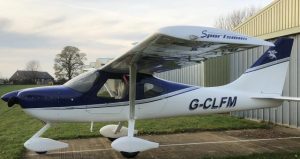
The GlaStar is a high-wing kitplane from the makers of the Glasair, and the Sportsman 2+2 is its larger, four-seat successor. Both combine a welded steel-tube cabin cage with a glassfibre fuselage skin and all-metal wings, and both have wings that fold back alongside the fuselage, so the aircraft can be trailered or tucked into a narrow hangar space. They can be built with a nosewheel, a tailwheel or floats, and switched between them later.
UK pilots buy them as fast, practical tourers on an LAA Permit to Fly. A 160–180 hp GlaStar cruises at around 140 kt, the Sportsman adds two rear seats and a much bigger useful load, and the high wing gives a good view of the ground for touring. They suit owners who want Glasair-level speed with a more forgiving, strut-braced high-wing layout.
History and design
Tom Hamilton’s company, Stoddard-Hamilton Aircraft, flew the GlaStar in 1994 as a two-seat kit, and around 300 had been built by 2004. The company later became Glasair Aviation, and around 2005 the GlaStar was replaced by the Sportsman 2+2, which has been produced since 2003. Glasair’s Two Weeks to Taxi programme let customers assemble a Sportsman at the factory with professional help, and the factory estimated about 1,200 build hours for a GlaStar kit.
The fuselage is a welded steel cage with a glassfibre (or optional carbon fibre on the Sportsman) skin, while the wings and tail surfaces are aluminium. The undercarriage converts between tricycle and tailwheel, and the type is approved for floats. In 2023 Glasair announced that production would move to China, with technical support staying in the USA.
Variants
GlaStar (LAA 295): the original two-seat, side-by-side kit. Early aircraft used a 100 hp Rotax 912ULS, which proved underpowered; most use a Continental IO-240 (125 hp), Lycoming O-320 (150–160 hp) or O-360 (180 hp). MTOW is 1,960 lb (889 kg) on wheels and 2,100 lb (953 kg) on floats.
Glasair GlaStar Sportsman / Sportsman 2+2 (LAA 295A): the larger development with two rear seats, a 2,350 lb (1,066 kg) MTOW on wheels and 50 US gallons of fuel. Engines include the Lycoming IO-360 (180 hp), IO-390 (210 hp) and the Continental CD-155 diesel. A carbon-fibre fuselage option raises MTOW by 150 lb.
Specifications
Factory figures for prototype aircraft. Empty weights of customer-built GlaStars range from about 1,140 to 1,340 lb.
Specification
GlaStar (160 hp)
Sportsman 2+2 (180 hp)
Wingspan
35 ft (10.67 m)
35 ft (10.67 m)
Width with wings folded
8 ft (2.44 m), tail removed
8 ft 6 in (2.59 m), tail removed
Length
22 ft 4 in (6.81 m)
23 ft (7.01 m)
Wing area
128 sq ft (11.9 m²)
131 sq ft (12.2 m²)
Empty weight (typical)
1,200 lb (544 kg)
1,350 lb (612 kg)
Maximum take-off weight (wheels)
1,960 lb (889 kg)
2,350 lb (1,066 kg)
Maximum take-off weight (floats)
2,100 lb (953 kg)
2,500 lb (1,134 kg)
Useful load (typical)
760 lb (345 kg)
1,000 lb (454 kg)
Usable fuel
27.6 US gal (104 L) standard, 45.1 US gal (171 L) with auxiliary tanks
50 US gal (189 L)
Engine
Lycoming O-320, 160 hp
Lycoming IO-360, 180 hp
Cruise, 75% power at 8,000 ft
140 kt (161 mph)
137 kt (158 mph)
Top speed, sea level
145 kt (167 mph)
145 kt (167 mph)
Stall, full flap / clean
43 / 49 kt
42 / 51 kt
Rate of climb at gross
1,390 ft/min
1,000 ft/min
Range at 65% power
481 nm standard fuel, 829 nm with auxiliary tanks
721 nm
Fuel burn at 65% power
6.7 US gal/h (25 L/h)
8.5 US gal/h (32 L/h)
Load limits
+3.8 / −1.5 g
+3.8 / −1.5 g
Performance and handling
The GlaStar is quick for a high-wing two-seater. With a 160 hp O-320 and constant-speed propeller the factory quotes 140 kt at 75% power and a solo climb of over 2,000 ft/min, and the 180 hp version reaches 145 kt. Stall with full flap is in the low 40s, and Glasair says take-off and landing rolls at gross are under 400 ft, which makes it comfortable on most UK farm strips.
The Sportsman trades some sprightliness for load: about 1,000 lb of useful load and 50 US gallons of fuel make it a genuine four-seat or two-plus-bags tourer, with 137 kt from the 180 hp engine and 150 kt from the 210 hp IO-390. The CD-155 diesel version is slower, at 132 kt, but much more economical, at about 5.2 US gal/h and with a quoted range of over 1,100 nm on Jet A-1.
Owning one in the UK
Permit and LAA: both types are LAA-accepted (295 and 295A) and fly on an LAA Permit to Fly, with annual inspection and Permit revalidation through an LAA inspector. Annual costs are generally well below those of a certified aircraft, and an owner can do much of the maintenance. Check the LAA’s Type Acceptance Data Sheet for the approved engines, propellers and any mandatory modifications.
Licence: a PPL, LAPL or NPPL (SSEA), with tailwheel differences training for taildragger builds and variable-pitch propeller training if a constant-speed propeller is fitted.
Engines and fuel: most UK aircraft have Lycoming-type engines. Whether a particular engine can use mogas depends on its approval and the LAA’s mogas rules, so check the aircraft’s paperwork; one UK GlaStar for sale with a Superior XP-360 was advertised as mogas-approved.
Hangarage: the folding wings are a real asset in the UK, where hangar space is expensive. Folded, the GlaStar is about 8 ft wide with the tail removed.
Support: Glasair Aviation provides parts and technical support from the USA, and the owners’ group publishes specifications and resources. For comparable LAA tourers, see the Rans S-7 Courier or the Van’s RV-10, or browse all LAA types.
Buying checklist
Confirm whether it is a GlaStar (295) or a Sportsman (295A); the MTOW, seats and fuel differ considerably.
Ask for the actual weight schedule, as GlaStar empty weights range widely and decide the real payload.
Check the wing-fold hinges, pins and locking mechanism, and fold and unfold the wings during the viewing.
Have the steel cabin cage, gear mounts and wing attachments inspected for corrosion and damage, as far as access allows.
If the gear has been converted between tricycle and tailwheel, check that the change was approved and recorded.
Review the build log and Permit history, and check which engine and propeller are fitted against the LAA data.
On float or amphibian aircraft, check for corrosion and the condition of float attachment points.
Check fuel tank and auxiliary tank installations for leaks, and confirm the usable fuel figure for this aircraft.
The Light Aircraft Association lists these variants under the following type numbers. Check the LAA Type Acceptance Data Sheets (TADS) for the current approved engines, propellers and modifications before you buy.
What is the difference between the GlaStar and the Sportsman?
The GlaStar is the original two-seater with a 1,960 lb MTOW. The Sportsman 2+2 is the larger development with two rear seats, 50 US gallons of fuel and a 2,350 lb MTOW.
Is it on an LAA Permit to Fly?
Yes. The GlaStar is LAA type 295 and the Sportsman is 295A, both Group A, so they fly on an LAA Permit with an LAA inspector.
What licence do I need?
A PPL, LAPL or NPPL (SSEA). You will need tailwheel differences training for a taildragger and variable-pitch propeller training if it has a constant-speed propeller.
Do the wings fold?
Yes. Both fold back along the fuselage; with the tail removed the GlaStar is about 8 ft wide and the Sportsman 8 ft 6 in, which helps with trailering and hangar space.
How fast is a GlaStar?
Factory figures give 140 kt at 75% power with a 160 hp O-320 and 145 kt with a 180 hp O-360. Sportsman cruise is 137–150 kt depending on engine.
How much fuel does it burn?
The factory quotes about 6.7 US gal/h for the 160 hp GlaStar and 8.5 US gal/h for the 180 hp Sportsman at 65% power.
Can it go on floats?
Yes. Both are designed for straight or amphibious floats, with higher MTOWs on floats (2,100 lb for the GlaStar, 2,500 lb for the Sportsman).
Is it good for touring to France?
Yes. A GlaStar with auxiliary tanks or a Sportsman has a range of over 700 nm at economical power, enough for the Channel and beyond with reserves.
Can I still buy a kit?
Glasair announced in 2023 that production would move to China, and new-build production was paused until the new factory was ready. Check with Glasair Aviation for current availability.
Who supports it in the UK?
Support comes from Glasair Aviation in the USA, the owners’ community and LAA Engineering; we found no dedicated UK agent.
Is it aerobatic?
No. The structural limits are +3.8 g and −1.5 g, so it is a touring aircraft, not an aerobatic one.
Figures are typical published values for a standard example and vary with engine, propeller, build and modification state. Always use the aircraft’s own Pilot’s Operating Handbook, weight and balance schedule and LAA paperwork. Last checked November 2026.