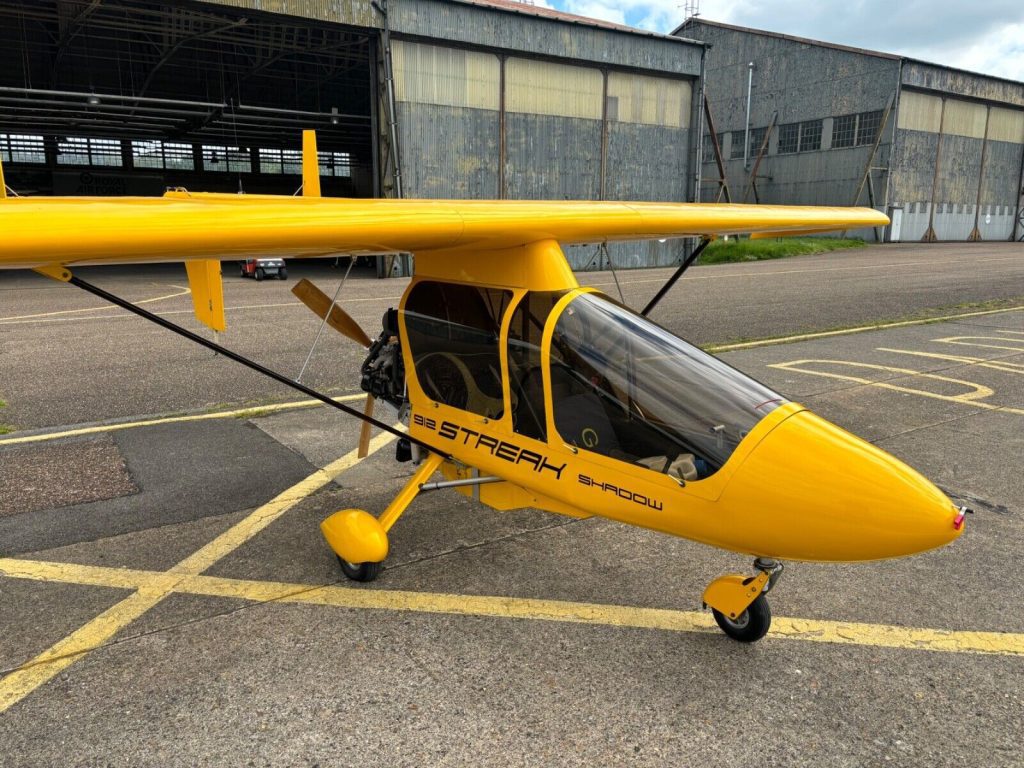
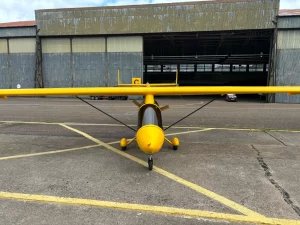
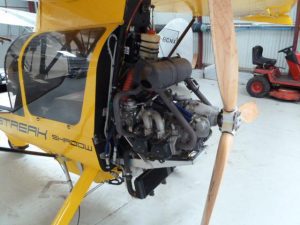
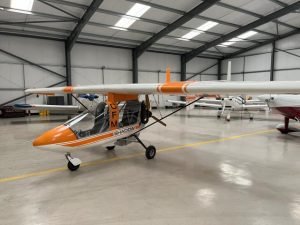
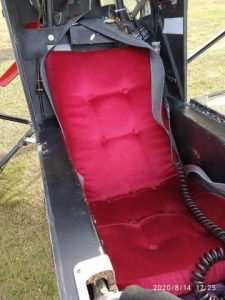
The CFM Shadow is a British two-seat, high-wing, pod-and-boom pusher designed by David Cook. The crew sit in tandem in a slim enclosed nacelle with the engine behind them, which gives an outstanding forward and downward view. The family runs from the original Shadow microlights through the shorter-winged, faster Streak Shadow to the wider-cabin Starstreak, and both factory-built and home-built examples fly in the UK.
Shadows are some of the cheapest two-seat three-axis aircraft on the UK market, and they have a strong record for long-distance and altitude flying. Production ended more than 20 years ago, so buyers today are choosing an older aircraft that relies on the BMAA, the LAA and a dedicated owner community for support.
History and design
The Shadow first flew in 1983, powered by a 53 hp Fuji Robin EC44, and production began in 1984 at David Cook’s company, Cook Flying Machines. The fuselage pod is built from Fibrelam panels with a glass-fibre nose and plywood sides, with metal tubing only where extra strength is needed, and a tailboom carries the tail behind the pusher propeller.
The Streak Shadow followed in 1988 with a shorter, thinner wing, and the Starstreak flew in 1992 with a narrower-chord wing and a wider cockpit. Aircraft were sold factory-built under BMAA oversight or as kits built under the PFA (now LAA). By June 2001, 397 Shadows of all types had been delivered to customers in 40 countries, including a 24-aircraft order of Streak Shadows for the Indian Air Force. Shadows made headlines with Eve Jackson’s 1987 flight from the UK to Australia, repeated by Brian Milton in 1988, and David Cook took a Streak to 27,066 ft in 1990.
The company went through two receiverships (1996 and 2002), and its successor Bella Aviation stopped trading after the CAA grounded the fleet over the original undercarriage. The AAIB records that the manufacturer ceased trading in August 2002 and that the BMAA and PFA took on responsibility for continued airworthiness.
Variants
Shadow B and C (CD): early air-cooled models, the B with a 40 hp Rotax 447 and the C from 1988 with a 50 hp Rotax 503 and streamlined struts. Many are still flying and change hands cheaply.
Shadow Series D and D-D (LAA 161, Microlight): a liquid-cooled 65 hp Rotax 582 with dual controls as standard.
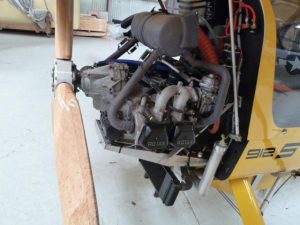
Shadow E: a Rotax 582 or 80 hp Rotax 912, an electric starter and long-range tanks.
Streak Shadow SA (LAA 206, Group A): a shorter-span foam and glass-fibre wing for more speed, with a Rotax 582 or 912.
Streak Shadow SA-M (LAA 206B, Microlight): a Streak built to microlight limits. The SLA development used bigger flap angles to lower the stall speed for the UK microlight category.
Starstreak Shadow SA-II (LAA 206A, Group A): a narrower-chord wing and a wider cockpit, with a Rotax 618 or 912.
Specifications
Figures are from pilot’s manual data reported for the Shadow D and the Streak Shadow, both with the Rotax 582UL. Individual aircraft vary with build, engine and modification state, so always use the aircraft’s own documents and the LAA or BMAA data for limits.
Specification
Imperial
Metric
Wingspan, Shadow D / Streak
32 ft 10 in / 28 ft
10.02 m / 8.53 m
Length
21 ft
6.41 m
Height
8 ft 2 in
2.49 m
Wing area, Shadow D / Streak
164 sq ft / 140 sq ft
15.26 m² / 13.0 m²
Fuel, main tank + slipper tank (see MPDs below)
5.3 + 6.6 Imp gal
24 + 30 litres
Engine
Rotax 582UL, 64 hp (other variants: Rotax 447, 503, 618 or 912)
Propeller
3-blade, 4 ft 4 in
1.32 m
Vne, Shadow D
107 kt
198 km/h
Cruise, Shadow D, 75% power
60 kt
111 km/h
Stall, flaps down, Shadow D / Streak
35 kt / 36 kt
64 / 66 km/h
Rate of climb
850 fpm
4.3 m/s
Glide ratio
13.2:1
Performance and handling
The Shadow’s selling points are efficiency and view. Both occupants sit in tandem ahead of the wing and the pusher engine, with nothing in front of them but the nose. A Shadow flown by David Cook shot aerial footage for the 1996 film Dragonheart. The quoted 13.2:1 glide ratio is good for an aircraft of this class, and the type’s record flights show what it can do on a tank of fuel.
The Streak’s shorter, thinner wing was designed for more speed than the original Shadow, and engines in the family range from 40 hp to 80 hp. Speeds and climb vary a lot with engine, propeller and wing, so fly the aircraft you are buying rather than relying on published figures.
Owning one in the UK
Which licence you need depends on the variant. The Shadow D (161) and Streak SA-M (206B) are microlights, flown on an NPPL(M) or a licence with a microlight class rating. The Streak SA (206) and Starstreak (206A) are LAA Group A and need an NPPL SSEA, LAPL(A) or PPL. Shadows are on a Permit to Fly under either the LAA or the BMAA, depending on how they were built and registered, and several UK Shadows are now advertised as SSDR (deregulated) aircraft. Check the aircraft’s current status before you buy, because it decides who oversees it and what paperwork you need.
The big airworthiness story is the undercarriage. In 2003 a Streak Shadow lost a mainwheel on take-off at Old Sarum when a poorly fused weld in the landing gear lower fitting failed. The AAIB report found similar weld defects in all eight other fittings it examined. The CAA responded with Mandatory Permit Directives 2003-019 R1 and 2004-002 restricting use of the under-fuselage slipper fuel tank, and required a modified or new undercarriage on affected aircraft. Any Shadow you look at should have documented compliance with the undercarriage and slipper tank directives that apply to it.
There is no longer a factory, so parts come from owners, specialists and second-hand stock. Talk to the LAA or BMAA technical office and existing owners before committing. You can find aircraft in our listings, browse other LAA aircraft, or compare another pusher, the Kolb Twinstar. The Wikipedia page has a fuller history.
Buying checklist
Identify the exact variant (C/CD, D, E, Streak SA or SA-M, Starstreak) and confirm whether it is LAA, BMAA or SSDR.
Check that the post-2003 undercarriage modification has been done and recorded, and how the slipper tank directives have been complied with.
Inspect the Fibrelam pod panels and bonded joints for delamination, impact damage and water ingress.
Check the tailboom and its attachments, the tail surfaces and the pusher propeller for damage.
Find out the engine type, hours since overhaul and history. Two-stroke Rotax 447, 503 and 582 engines need careful records.
Ask where spares will come from for airframe-specific parts, since the manufacturer no longer exists.
Get the latest weight and balance and check the permitted cockpit load for two people.
LAA type acceptance
The Light Aircraft Association lists these variants under the following type numbers. Check the LAA Type Acceptance Data Sheets (TADS) for the current approved engines, propellers and modifications before you buy.
It depends on the variant. The Shadow D and Streak SA-M are microlights (NPPL(M) or a microlight class rating), while the Streak SA and Starstreak are LAA Group A aircraft needing an NPPL SSEA, LAPL(A) or PPL.
Is the CFM Shadow still made?
No. The manufacturer stopped trading in August 2002, and the BMAA and LAA took over responsibility for continued airworthiness.
Is a Shadow on a Permit or a CofA?
UK Shadows fly on a Permit to Fly under the LAA or BMAA. Some are now advertised as SSDR (deregulated) aircraft, so check the status of the one you are buying.
What engine does a Shadow have?
Most have Rotax two-strokes: the 447 (40 hp), 503 (50 hp) or 582 (65 hp). Later Shadow E, Streak and Starstreak variants could take a Rotax 618 or 912.
What is the difference between a Shadow and a Streak Shadow?
The Streak (1988) has a shorter, thinner wing, giving more speed than the original Shadow. The Starstreak added a narrower-chord wing and a wider cockpit.
What was the undercarriage problem?
In 2003 a weld in a main landing gear lower fitting failed on take-off. The AAIB found weld defects in all eight other fittings it examined, and the CAA mandated a modified undercarriage and restricted use of the slipper fuel tank.
How much does a Shadow cost in the UK?
Recent UK asking prices on aircraftsale.co.uk ranged from about £4,250 for a Rotax 503 Shadow CD to £12,500 for a 912-powered wide-body Streak (2023 asking prices).
Is the Shadow good for aerial photography?
The tandem pod sits ahead of the wing and pusher engine, which gives a clear view forward and down, and a Shadow flown by David Cook filmed aerial footage for the film Dragonheart.
Can a Shadow fly long distances?
Shadows are known for long flights, including Eve Jackson’s 1987 flight from the UK to Australia. Check the fuel arrangement on any example, because the slipper tank has been subject to directives.
Who supports the Shadow in the UK?
There is no factory support. The LAA and BMAA technical offices oversee airworthiness, and parts come from specialists, owners and second-hand stock.
Figures are typical published values for a standard example and vary with engine, propeller, build and modification state. Always use the aircraft’s own Pilot’s Operating Handbook, weight and balance schedule and LAA paperwork. Last checked November 2026.