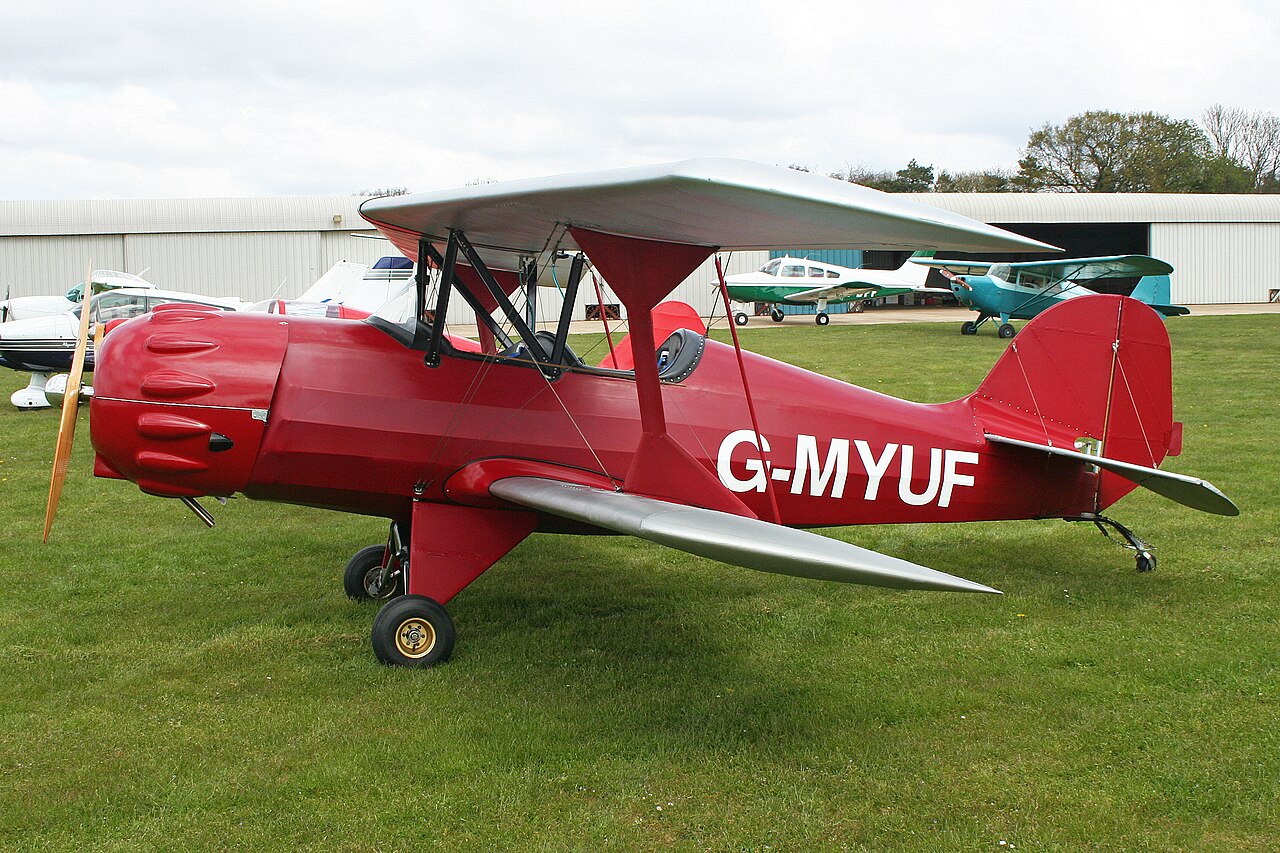
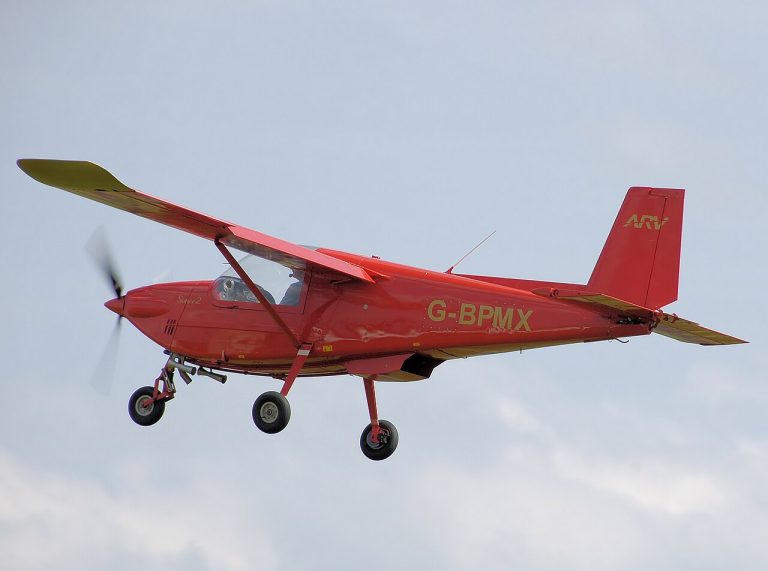
The Murphy Renegade Spirit is a Canadian two-seat, open-cockpit biplane kit with a round radial-style cowling, built from aluminium tube and covered in fabric. In the UK the LAA administers it in two forms: the Renegade Spirit UK as a microlight (type 188) and the Rotax 912-powered Renegade 912 as a Group A aeroplane (type 188A).
It is one of the most affordable ways into open-cockpit biplane flying in the UK, with Rotax engines and microlight running costs, and the microlight version can be flown on a microlight licence. The LAA says over 30 have been on its fleet, mostly the microlight version. Buyers should know that Murphy Aircraft collapsed in 2026, so there is no longer factory support.
History and design
Darryl Murphy designed the original single-seat Renegade in 1984 as a one-off for his own use, then set up Murphy Aviation in Chilliwack, British Columbia, with his brother Bryan to sell it. A second seat produced the Renegade II, and the Renegade Spirit, with its round cowling and extra fuselage stringers, first flew in May 1987. Wikipedia, citing Kitplanes, counts 590 Renegades built by 2011. History is in the Wikipedia article.
According to the LAA data sheet, the fuselage is riveted 6061-T6 aluminium tube, the wings use a NACA 23012 section with a swept upper wing and dihedral on the lower, and there are ailerons on all four wings but no flaps. Fuel is in one or two tanks in the upper wing, the main gear is bungee sprung and the brakes work from the rear cockpit only. Murphy Aircraft was bought by China’s Duofu Group in 2022, and in October 2026 Canadian Aviator reported it insolvent, with its assets auctioned.
Variants
Renegade Spirit UK (LAA 188, microlight): the most common UK version, normally with a Rotax 532 or 582 two-stroke and a 390 kg maximum weight. Some have a Jabiru 2200A or a BMW R100 or RT1200 flat-twin; with the Jabiru and BMW the example limitations are single-seat.
Renegade Spirit UK as Group A: the LAA data sheet also shows Group A examples, such as a Rotax 582 or Jabiru version at 415 kg, two seats.
Renegade 912 (LAA 188A, Group A): powered by the 80 hp Rotax 912, with the 100 hp 912 ULS also fitted, at 476 kg.
Renegade Spirit F30: a two-seat Hirth F30-powered version, Group A, at 420 kg.
Specifications
UK limits are from LAA TADS 188/188A. Dimensions and performance are for the earlier Renegade II with a Rotax 503 (Wikipedia, citing Kitplanes and Murphy); the Spirit uses the same basic airframe but we have not confirmed its own figures.
Specification
Imperial
Metric
Upper wingspan (Renegade II)
21 ft 0 in
6.40 m
Lower wingspan (Renegade II)
19 ft 8 in
5.99 m
Length (Renegade II)
18 ft 5 in
5.61 m
Height (Renegade II)
6 ft 5 in
1.96 m
Wing area (Renegade II)
153 sq ft
14.2 m²
Empty weight (Renegade II)
375 lb
170 kg
Max weight, Spirit UK microlight
860 lb
390 kg
Max weight, Group A 582 or Jabiru
915 lb
415 kg
Max weight, Renegade 912
1,049 lb
476 kg
Max weight, Spirit F30
926 lb
420 kg
Fuel (Renegade II)
14 US gal
53 litres
Engines (UK)
Rotax 532, 582, 912, 912 ULS; Jabiru 2200A; BMW R100 or RT1200; Hirth F30
Vne (all UK versions)
120 mph (104 kt)
193 km/h
Cruise (Renegade II, Rotax 503)
75 mph (65 kt)
121 km/h
Stall (Renegade II)
36 mph (31 kt)
58 km/h
Rate of climb (Renegade II)
700 ft/min
3.6 m/s
Range (Renegade II)
245 nm
454 km
Performance and handling
The Renegade is a slow, open-air biplane: the Renegade II figures above suggest a cruise in the mid-60s of knots on 50 hp, and all UK versions share a 120 mph (104 kt) Vne. Wikipedia credits the 80 hp Rotax 912 with giving the type noticeably better performance. With no flaps, the approach is managed with power and attitude, and because the brakes work only from the rear cockpit, the pilot in command needs to sit in the back.
Wikipedia quotes ultimate g limits of +10/−6 for the Renegade II, but the LAA says it is not cleared for aerobatics in the UK, and intentional spinning is prohibited. The tailwheel is steerable and fully castoring.
Owning one in the UK
A Renegade Spirit UK microlight can be flown on an NPPL with a microlight rating; the Group A versions need an NPPL SSEA, LAPL(A) or PPL(A). Tailwheel differences training is required either way. Every UK Renegade was built from a slow-build kit and flies on an LAA Permit to Fly, inspected each year by an LAA inspector, and microlight versions have a maximum permitted empty weight. The Rotax engines are common and well supported in the UK.
The LAA type data sheet lists four LAA required modifications covering tailspring attachment cracks, engine mount cracks, shoulder-strap chafing and an inspection of wing components, plus an explanatory letter on the weight increase. Its Safety Spot entry describes fuel being pumped between tanks and overboard because a vapour return line lacked a restrictor. The sheet names a UK contact for Murphy types. With the factory gone, keep the build manual and bulletins with the aircraft.
Three Renegade Spirits advertised on aircraftsale.co.uk in 2023 were asking £15,000 (Rotax 582, out of permit), £17,000 (Jabiru 2200) and £28,000 (a 2022-built Rotax 912 ULS, Group A). Browse aircraft for sale and other LAA aircraft, or compare Murphy’s monoplane, the Murphy Rebel.
Buying checklist
Check the Operating Limitations: microlight or Group A, two-seat or single-seat, and the maximum weight, as these vary with engine and history.
For a microlight, check the weight report against the maximum permitted empty weight.
Inspect the tailspring attachment and the engine mount for cracks (MOD/188/001 and 002).
Check the shoulder harness for chafing (MOD/188/003) and the wing components covered by MOD/188/004.
Check the fuel system, especially the vapour return line restrictor on twin-tank aircraft.
Assess the fabric, bracing wires and bungees, and check the brakes from the rear cockpit.
Ask what manuals, bulletins and spares come with it, as Murphy Aircraft no longer trades.
LAA type acceptance
The Light Aircraft Association lists these variants under the following type numbers. Check the LAA Type Acceptance Data Sheets (TADS) for the current approved engines, propellers and modifications before you buy.
A Renegade Spirit UK microlight can be flown on an NPPL with a microlight rating. Group A versions, including the Renegade 912, need an NPPL SSEA, LAPL(A) or PPL(A). Tailwheel differences training is needed for both.
Is it a microlight?
The Renegade Spirit UK (LAA type 188) is normally a 390 kg microlight. The Renegade 912 (type 188A), F30 and some 582 and Jabiru aircraft are Group A aeroplanes.
Is it on a Permit or a CofA?
All UK examples are kit-built and fly on an LAA Permit to Fly, inspected each year by an LAA inspector.
How much does one cost in the UK?
Three advertised on aircraftsale.co.uk in 2023 were asking £15,000 to £28,000, the top figure for a nearly new Rotax 912 ULS aircraft.
What engines are fitted?
Mostly Rotax 532 or 582 two-strokes on microlights and the Rotax 912 or 912 ULS on Group A aircraft, with some Jabiru 2200A, BMW and Hirth installations.
How fast is it?
All UK versions have a Vne of 120 mph (104 kt). Published Renegade II figures give about 75 mph (65 kt) cruise on 50 hp.
Can it do aerobatics in the UK?
No. The LAA says the type is not cleared for aerobatics in the UK, and intentional spinning is prohibited.
Can I fly it solo from the front?
The brakes work from the rear cockpit only, according to the LAA data sheet, so in practice the pilot flies from the rear seat. Check the individual aircraft’s limitations.
Can I still buy a kit or parts?
Murphy Aircraft was reported insolvent in October 2026 and its physical assets were auctioned, so factory kits and parts are no longer available.
Who supports it in the UK?
The LAA, through its inspectors and type data sheet, which also names a UK contact for Murphy types. Rotax engines are supported by UK dealers.
What should I check before buying?
The category and weight limits, the tailspring and engine mount for cracks, harness chafe, the fuel system and the condition of the fabric and wires.
Figures are typical published values for a standard example and vary with engine, propeller, build and modification state. Always use the aircraft’s own Pilot’s Operating Handbook, weight and balance schedule and LAA paperwork. Last checked November 2026.