The Rans S-6 Coyote II is a two-seat, high-wing kitplane from Rans Designs of Kansas and one of the most widely built light kit aircraft in the world. It has side-by-side seats, doors on both sides, a choice of nosewheel or tailwheel undercarriage, and Rotax engines from the two-stroke 503 up to the 100 hp 912 ULS. In the UK it flies on an LAA Permit to Fly, as a microlight (S6, S6-ES, S6-ESA, S6-ESD) or as a Group A light aeroplane (the 116-wing versions).
It is one of the cheapest ways into a two-seat, three-axis aeroplane with a cabin, which makes it popular with first-time owners and syndicates. Expect simple systems, low running costs and plenty of owner support. See current examples on our aircraft listings and other LAA aircraft.
History and design
Designer Randy Schlitter built the single-seat S-4 Coyote in 1982–83, and the two-seat Coyote II grew out of the S-5 Coyote. The improved S-6ES with an extended-span wing replaced the original S-6 in April 1990, and the S-6S Super Six followed in 1993. More than 1,800 had flown by January 2008. European registers held 615 Coyotes in 2010.
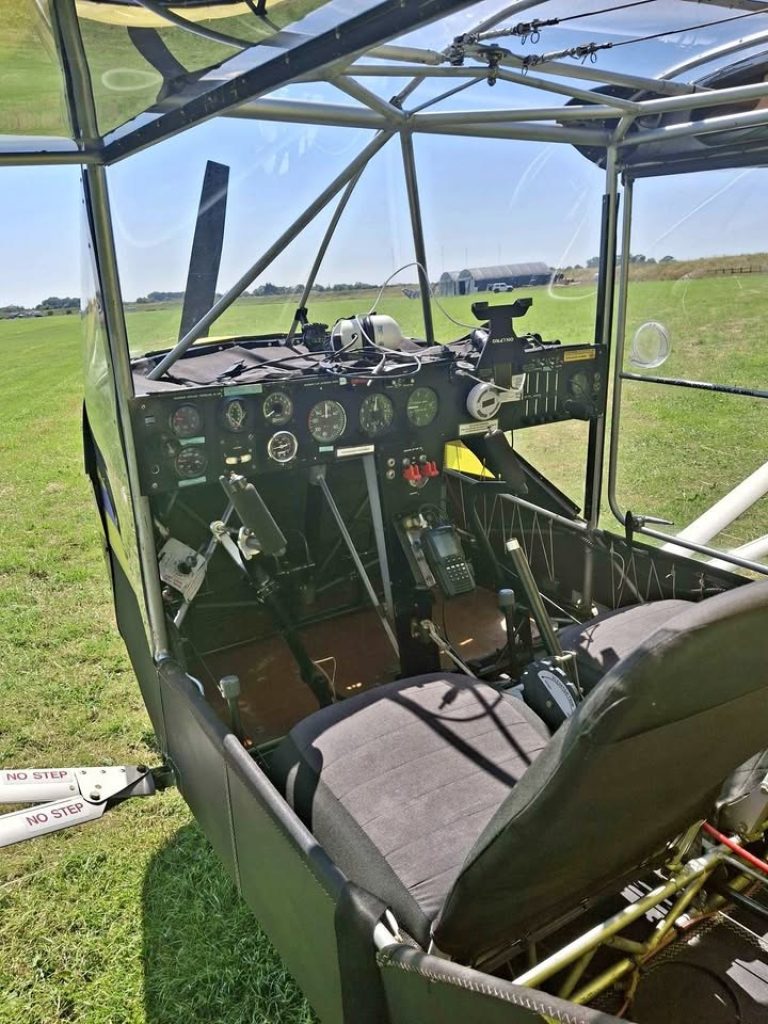
The cockpit section is welded 4130 steel tube and the rear fuselage riveted aluminium. On the S-6ES, the wings and tail are covered with pre-sewn Dacron envelopes laced to the structure. The S-6S Super Six uses traditional dope-and-fabric covering instead. Rans quoted about 250 hours to build an S-6ES and about 500 hours for a Super Six. Rans offered several wings: the standard wing, the ‘116’ wing and later a light-sport wing.
Variants
S6 (LAA 204, Microlight): the original two-seater, typically with a 50 hp Rotax 503 two-stroke.
S6-ES and S6-ESA (LAA 204, Microlight): the extended-span wing version, offered with the Rotax 582 and later the 912, and classed as a microlight in the UK.
S6-116 and S6S-116 Super Six (LAA 204A, Group A): the ‘116’ wing option (the S6S being the dope-and-fabric Super Six). Engines vary, so check the individual aircraft. As Group A aircraft they need a light-aeroplane licence rather than a microlight one.
S6-ESD and S6-ESD XL (LAA 204B, Microlight): further microlight variants. AAIB reports show ESD XLs flying with the Rotax 503.
Specifications
Rans’s current spec sheet is for the US S-6ES at 1,320 lb gross, which is heavier than UK microlight weights. The older Taylor (1996) data is for a lighter Rotax 582 S-6ES. Use the aircraft’s own LAA paperwork for its UK limits.
The Coyote II is a gentle, slow-to-medium-speed tourer. Rans quotes 105–110 mph cruise with a Rotax 912 and an 80 deg/sec roll rate, and the older 582 version cruised around 90 mph. Low stall speeds and short ground rolls make it a good farm-strip aircraft.
It does, however, need respect at low speed. After a fatal stall/spin accident in 2016, the AAIB reported that it had investigated sixteen Rans S6 accidents involving stalls or spins in the UK since 1994. The LAA began a review of accident data on this and similar microlights, with a flight-test programme. Good airspeed discipline in the circuit and proper type conversion are essential.
Owning one in the UK
Licence: microlight variants (LAA 204 and 204B) can be flown with microlight privileges, such as an NPPL with a microlight rating. The 116-wing versions (204A) are Group A and need an NPPL SSEA, LAPL or PPL.
Permit to Fly: all UK Coyotes are on LAA Permits, revalidated annually with an LAA inspector. A 2025 AAIB report on an S6-ESD XL stressed that any re-covering, weighing and maintenance must be properly inspected and signed off by an LAA inspector, and pointed owners to LAA Technical Leaflet 2.01, A guide to LAA Aircraft Ownership.
Fabric: ES and ESD aircraft use laced pre-sewn Dacron envelopes. Replacement skins are a normal part of ownership but must be fitted correctly and approved.
Engine and fuel: engines range from Rotax 503 and 582 two-strokes to the four-stroke 912. Rans quotes 4.5–5.0 US gal/h at 75% power for the 912 versions.
Airworthiness directives: Rans publishes its own directives for the S-6, including AD 102 (116-wing jury struts), AD 114 (Coyote II skylight), AD 128 (aileron push-pull tubes), AD 130 (taildragger tail spring mount), AD 137 (nose gear strut inspection) and AD 138 (main gear axle).
Support: Rans Designs supports the type from Kansas through its directives and spec pages. In the UK, support is through the LAA and its inspectors. We couldn’t confirm a current UK agent.
Related types: for a tandem high-wing from the same designer, see the Rans S-7 Courier.
Confirm the exact variant and wing (standard, ES or 116) and its LAA type number, which decides microlight or Group A status.
Check compliance with the Rans directives for your variant, especially jury struts on 116 wings, nose gear strut, main gear axles and aileron push-pull tubes.
Inspect the fabric envelopes: fit, tension, lacing and UV damage. Ask for LAA approval and duplicate inspection records for any re-skin.
Look at the steel-tube cockpit cage for corrosion, and the riveted aluminium tail cone for cracks.
Check the weighing report and how much useful load is left at the aircraft’s approved maximum weight.
Review engine type and hours. Two-stroke 503/582 engines and four-stroke 912s have very different overhaul costs.
Ask about the previous owner’s experience with stall and spin training, and arrange a proper conversion yourself.
LAA type acceptance
The Light Aircraft Association lists these variants under the following type numbers. Check the LAA Type Acceptance Data Sheets (TADS) for the current approved engines, propellers and modifications before you buy.
It depends on the variant. The S6, S6-ES, S6-ESA, S6-ESD and ESD XL are UK microlights, so a microlight rating covers them. The S6-116 and S6S-116 Super Six are Group A and need an NPPL SSEA, LAPL or PPL.
Is the Rans S6 on a Permit or a CofA?
UK Coyotes are homebuilts on an LAA Permit to Fly, revalidated each year with an LAA inspector.
How much does a Rans S6 cost in the UK?
Recent aircraftsale.co.uk listings mostly asked £10,000–£12,500 (2023–26 asking prices), with tired examples from about £6,000 and a 2001 S6-ESA at £17,000.
Which engines are fitted?
Rotax 503 and 582 two-strokes on earlier and lighter aircraft, and the 80 hp Rotax 912 UL or 100 hp 912 ULS on later ones.
How fast does it cruise?
Rans quotes 105 mph with a 912 UL and 110 mph with a 912 ULS. Older 582-powered S-6ES data gives about 90 mph.
Is the Rans S6 safe?
It has a stall/spin accident history in the UK. The AAIB reported sixteen S6 stall or spin accidents investigated since 1994, and the LAA started a review and flight-test programme. Good training and airspeed discipline matter.
Are there any airworthiness directives?
Rans publishes its own directives for the S-6, covering items such as 116-wing jury struts, nose gear struts, main gear axles, aileron push-pull tubes and the skylight.
Can I get one with a tailwheel?
Yes. The Coyote II was offered with nosewheel or tailwheel gear, and Rans has issued directives for the taildragger tail spring mount.
Is it a good first aircraft?
It is one of the cheapest two-seat cabin aircraft to buy and run in the UK. Get a thorough type conversion with particular attention to slow flight and stalls.
What fuel capacity does it have?
Rans’s current S-6ES spec sheet gives 18 US gallons (68 litres). Older UK aircraft may have different tanks, so check the individual aircraft.
Who supports the Rans S6 in the UK?
Rans Designs in the USA publishes directives and specs. In the UK, support comes through the LAA, its inspectors and the large owner community. We couldn’t confirm a current UK agent.
What is the fuel burn?
Rans quotes 4.5 US gal/hr (about 17 L/hr) at 75% power with the 80 hp Rotax 912 UL, and 5.0 US gal/hr (about 18.9 L/hr) with the 100 hp 912 ULS. Two-stroke 503 and 582 aircraft will differ.
Figures are typical published values for a standard example and vary with engine, propeller, build and modification state. Always use the aircraft’s own Pilot’s Operating Handbook, weight and balance schedule and LAA paperwork. Last checked November 2026.