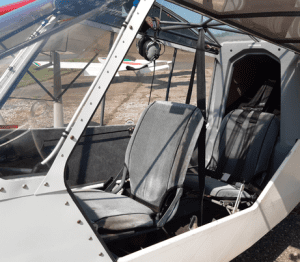
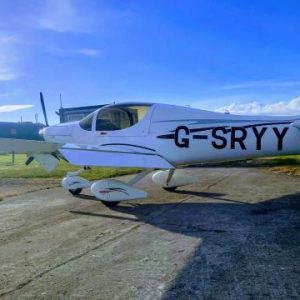
The Rans S-7 Courier is a two-seat, tandem, high-wing taildragger from Rans Designs of Hays, Kansas. It has a welded steel-tube fuselage, aluminium-tube wings, fabric covering and big curved side doors, and it looks and flies like a scaled-down bush plane. In the UK it is an LAA Group A type, so it flies on an LAA Permit to Fly and needs a light-aeroplane licence rather than a microlight rating.
UK pilots buy it for grass-strip flying and tailwheel fun at modest running costs. It is a step up from Rans’s side-by-side S-6 Coyote II, and the current S-7S kit is still in production. Browse our aircraft listings for examples, or see other LAA aircraft.
History and design
Randy Schlitter designed the Courier as a two-seat trainer for his single-seat S-4 Coyote, naming it after the Helio Courier. It first flew in November 1985. The early S-7 used a 50 hp Rotax 503, with the 64 hp Rotax 582 as an option. Rans refined it as the S-7C, certified in the US primary category in 2001, then released the kit S-7S in 2003 with the 100 hp Rotax 912ULS. A factory-built S-7LS followed for the US light-sport market. Wikipedia records 325 completed by December 2007.
The cockpit is welded 4130 steel tube, the wing has aluminium-tube spars with stamped aluminium ribs and streamline struts, and the wings and tail are fabric covered. The current S-7S has two-position flaps, electric elevator trim, dual controls front and rear, aluminium leaf-spring gear and a steerable tailwheel. Rans updated the ailerons around 2012 with a bull-nose counterbalance and ball-bearing hinges, which Kitplanes found made the roll forces much lighter. Rans now quotes 1,000–1,500 hours to build a kit.
Variants
S7 (LAA 218, Group A): the original Courier, usually with a Rotax two-stroke (503 or 582) and smaller fuel tanks. Check engine and weights on each aircraft.
S7S (LAA 218, Group A): the kit version of the refined S-7C, designed around the 100 hp Rotax 912ULS. Later kits have 26 US gal of fuel (two 13 gal wing tanks) and a header tank, and the gross weight rose to 1,320 lb in the US.
Tail options: Rans offers the current kit with a curved tail or its ‘signature’ tail shape.
Specifications
These are Rans’s current figures for the S-7S with a Rotax 912ULS (spec sheet updated October 2020). The 1,320 lb gross matches the US light-sport limit; UK aircraft should be flown to the weight on their own LAA paperwork.
Specification
Imperial
Metric
Wingspan
29 ft 3 in
8.92 m
Wing area
147.1 sq ft
13.67 m²
Length
23 ft 3 in
7.09 m
Height (taildragger)
6 ft 3 in
1.91 m
Cockpit width
30 in
0.76 m
Empty weight
732 lb
332 kg
Gross weight (Rans, US)
1,320 lb
599 kg
Useful load
588 lb
267 kg
Baggage
50 lb, 10 cu ft
23 kg
Fuel capacity
26 US gal (21.6 imp gal)
98 litres
Engine
Rotax 912ULS, 100 hp
Propeller
70 in ground-adjustable (spec sheet)
Fuel burn at 75% power
5.0 US gal/h
18.9 L/h
Vne
130 mph / 113 kt
209 km/h
Cruise
110 mph / 96 kt
177 km/h
Stall (clean / flaps)
39 / 33 mph (34 / 29 kt)
63 / 53 km/h
Rate of climb
850 ft/min
4.3 m/s
Take-off roll
325 ft
99 m
Landing roll
340 ft
104 m
Range / endurance
572 statute miles (497 nm) / 5.2 h
921 km
Limit load factors
+4 g / −2 g
Performance and handling
Rans claims a 110 mph cruise. In Kitplanes’ 2012 test of a 912S-powered S-7S with a three-blade Warp Drive propeller, the reviewer measured 104 mph TAS at 5,300 rpm and 94 mph at 4,800 rpm. Climb at 65 mph IAS, below gross, started at 1,200 ft/min and settled to about 850 ft/min, which matches the factory figure.
The tester called the stall a non-event, with a mild shudder and the stick going soft, and found pitch stability excellent and tracking on take-off very good. Turns need some lead rudder. The tandem layout puts the pilot on the centreline, and the 60 in curved doors make loading easy.
Owning one in the UK
Licence: as a Group A type it needs an NPPL SSEA, LAPL(A) or PPL, plus tailwheel differences training if you haven’t flown taildraggers.
Permit to Fly: UK Couriers are homebuilts on an LAA Permit to Fly, revalidated each year after an LAA inspector’s inspection. Fabric condition, repairs and any modifications need LAA approval.
Engine: most S7S aircraft use the Rotax 912ULS; early S7s may have two-stroke Rotax engines, which have very different overhaul costs and lives.
Hangarage and insurance: with a 29 ft 3 in span it needs a conventional hangar space. Insurers will usually ask about your tailwheel experience, so have your logbook ready when you get quotes.
Kits and support: Rans Designs still sells the S-7S kit and supports the type from Kansas through its S-7S Courier page, parts manuals and directives. Rans’s 2026 price sheet lists the airframe kit at US$43,540, less firewall forward, plus US$8,500 for the 912ULS installation kit; the engine and propeller are extra. We couldn’t confirm a current UK agent, so UK support is through the LAA and its inspectors.
Related types: see the side-by-side Rans S-6 Coyote II or another tube-and-fabric taildragger kit, the Kitfox. More background is on Wikipedia.
Buying checklist
Confirm whether it is an early S7 or an S7S, which engine is fitted, and what MTOW is on the aircraft’s LAA paperwork.
Check the fabric for UV damage, tension and repairs, and ask when it was last covered.
Inspect the steel-tube fuselage for corrosion, especially low down near the tail and gear attachments.
Check the ailerons: is it the older type or the later counterbalanced version, and are the hinges and bearings in good condition?
Look at the leaf-spring gear, tailwheel steering and brakes, which work hard on grass strips.
Check which Rans directives apply to your aircraft and whether they have been done.
Arrange a proper tailwheel check-out before flying it yourself.
LAA type acceptance
The Light Aircraft Association lists these variants under the following type numbers. Check the LAA Type Acceptance Data Sheets (TADS) for the current approved engines, propellers and modifications before you buy.
It is LAA Group A, so you need an NPPL SSEA, LAPL(A) or PPL. It is a taildragger, so you’ll also need tailwheel differences training if you don’t have it.
Is the S7 a microlight?
No. The LAA lists the S7 and S7S (type 218) as Group A.
Is it on a Permit or a CofA?
UK Couriers are homebuilts on an LAA Permit to Fly, renewed every year after an inspection by an LAA inspector.
How fast does it cruise?
Rans quotes 110 mph (96 kt) with a 912ULS. Kitplanes measured 104 mph TAS at 5,300 rpm and 94 mph at 4,800 rpm.
What is the fuel burn?
Rans gives 5.0 US gal/h (about 19 litres/h) at 75% power with the 912ULS.
How much fuel does it carry?
The current S-7S has two 13 US gal wing tanks (26 US gal, 98 litres) and a header tank. Older aircraft had less; Kitplanes said capacity rose from 18 to 26 gallons.
Is it still in production?
Yes. Rans sells the S-7S kit. Its 2026 price sheet gives US$43,540 for the airframe kit less firewall forward, plus US$8,500 for the 912ULS install kit, with the engine extra.
How long does it take to build?
Rans now quotes 1,000–1,500 hours for the S-7S kit.
Who supports the S7 in the UK?
Rans Designs supports it from Kansas. In the UK, support is through the LAA and its inspectors. We couldn’t confirm a current UK agent.
Is it a good touring aircraft?
Rans quotes a 572-mile range and 5.2 hours endurance, so trips to France are practical. Tandem seating and a 50 lb baggage limit mean you’ll need to pack light.
Can it do aerobatics?
No. Rans gives limit load factors of +4 g and −2 g, which is a normal-category envelope.
Figures are typical published values for a standard example and vary with engine, propeller, build and modification state. Always use the aircraft’s own Pilot’s Operating Handbook, weight and balance schedule and LAA paperwork. Last checked November 2026.