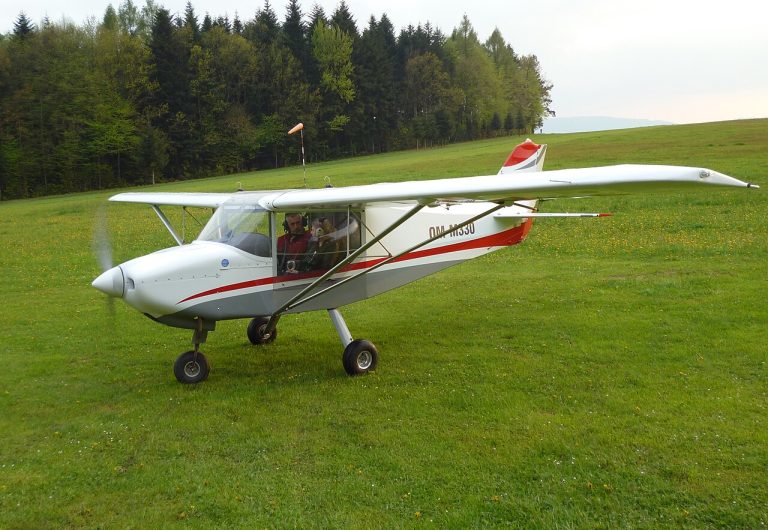
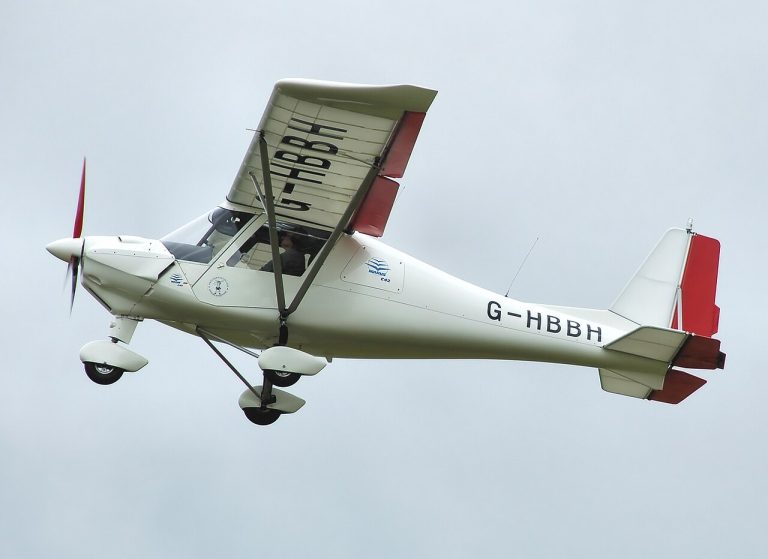
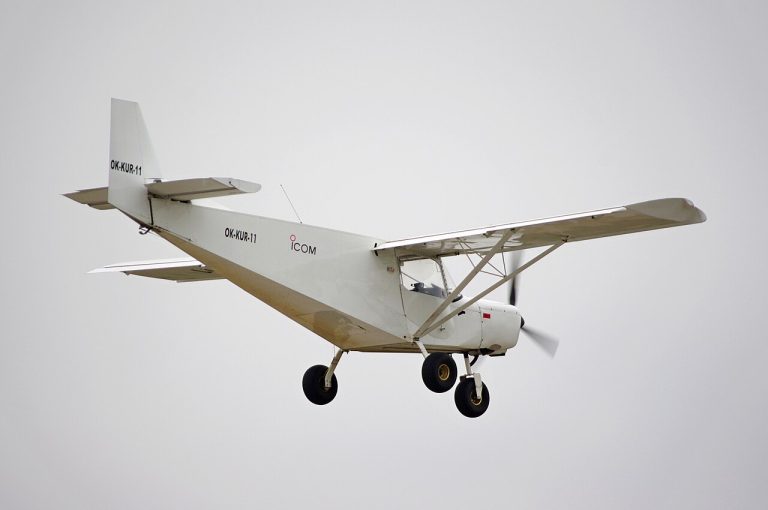
The Whittaker MW6 is a British two-seat, open-cockpit microlight designed by Mike Whittaker and built from plans using commercial aluminium tube, steel, plywood ribs and fabric. It comes in tandem-seat MW6 (often called Merlin) and side-by-side MW6-S (Fatboy) forms, and all versions are administered by the LAA as microlights under type 164.
It suits builders and budget-minded microlight pilots who want a simple, robust two-seater that can be maintained under LAA oversight. Wikipedia says more than 200 sets of plans have been sold, making it Whittaker’s most popular design. Most UK examples are now decades old, so condition and storage history matter far more than the badge.
History and design
The MW6 grew out of Whittaker’s single-seat MW5 Sorcerer. Wikipedia describes a strut-braced parasol wing, an open two-seat cockpit, fixed tricycle gear and a single tractor engine mounted above the cockpit; the LAA describes it as a high-wing microlight. Construction uses pop rivets and bolts, with a little turning, milling and welding. The wing is a single large tube spar carrying both bending and torsion, with plywood and spruce ribs slid on and bonded with glass fibre and resin; builders must proof-load sample rib joints. The all-flying tail surfaces slide onto spigots. Background is in the Wikipedia article.
Over the years the type got heavier, and the LAA cleared a series of weight increases, first through wing changes and later, once the UK microlight rules allowed a minimum stall speed criterion, without them.
Variants
MW6: the original tandem two-seater, cleared at 372 kg.
MW6-S: the side-by-side derivative, also 372 kg originally.
MW6 (Modified) and MW6-S (Modified): extended wingtips and wide-chord strut fairings allowed 390 kg. The LAA later accepted the basic MW6 and MW6-S at 390 kg without these changes, as they meet the stall speed criterion.
MW6-LW and MW6-S-LW: a longer-span wing that gives 390 kg without the wide strut fairings.
415 kg modification: a later change lets the Modified and LW versions fly at 415 kg.
Engines include the Rotax 503, 532 and 582, Hirth 2706 and Robin EC44PM. The LAA recommends the more powerful engines because climb can be marginal two-up.
Specifications
Dimensions and performance are for the MW6-S with a Rotax 503, from the World Directory of Leisure Aviation (via Wikipedia). UK limits are from LAA TADS 164.
Specification
Imperial
Metric
Wingspan (MW6-S)
32 ft 9 in
9.98 m
Wing area (MW6-S)
164 sq ft
15.24 m²
Empty weight (MW6-S)
419 lb
190 kg
Maximum weight (LAA, by modification state)
820 / 860 / 915 lb
372 / 390 / 415 kg
Maximum permitted empty weight (LAA)
182 to 228 kg, depending on engine and maximum weight
This is a slow, draggy open-cockpit microlight: about 55 knots cruise and a 30-knot stall on a Rotax 503, with an 80-knot Vne. The World Directory of Leisure Aviation calls the MW6-S and MW6-T solid and safe, but says performance does not match newer designs. Climb is the weak point: the LAA warns that with a 503 at the higher weights the climb rate may be low, and every aircraft must show at least 250 ft/min at maximum weight or have its weight reduced.
The LAA also notes that some MW6s have shown marginal directional stability, cured with stiffer rudder centring springs, and weak pitch centring, cured with Flettner strips on the tailplane trailing edge. There is no flight manual, so the LAA strongly recommends a briefing from a pilot experienced on type. Aerobatics and spinning are prohibited.
Owning one in the UK
The MW6 is a microlight, so an NPPL with a microlight rating is enough, and it has tricycle gear so no tailwheel training is needed. All are plans-built and fly on an LAA Permit to Fly, inspected each year by an LAA inspector, with LAMS as the maintenance guide. As a microlight it needs a CAA noise certificate specific to each aircraft, renewed after any change to the engine, propeller or exhaust, and a weight and payload placard. Engines are Rotax two-strokes, maintained to Rotax’s schedule and bulletins.
The LAA type data sheet lists four mandatory modifications (tailplane pivot, design update, anti-balance tab attachment and wing and tail spar/rib joints) and the general MPD on flexible fuel hose. Support comes from the MW Club and its newsletter, and plans were listed as available as of 2015. In 2012 an MW6 Merlin that had been stored for years lost power after take-off on a Permit check flight; the AAIB report records a loose, clogged fuel strainer in a degraded glass-fibre tank.
Confirm the variant and modification state (MW6, MW6-S, Modified or LW) and the maximum weight on the Operating Limitations, and check the empty weight against the LAA maximum for that engine.
Check the four LAA mandatory modifications are recorded as done.
Look for loosening or separation of the bonded rib-to-spar joints in the wing and tail.
Check the tailplane trim spring and its attachments for wear, corrosion or cracks; the LAA warns a failure can cause violent tab flutter.
Test the fabric strength, as many MWs are due for recovering, and look for corrosion, loose rivets and rodent damage on stored aircraft.
Check the fuel system: tank condition, strainer, non-aviation fuel pipes, pulse pump and line, as the fuel is lifted a long way to the engine.
Check the seats are robust and the harness attachments match the drawings.
On fan-cooled Rotaxes, check the fan belt pulleys for corrosion; on Robin engines, ask the LAA about the reduction drive.
LAA type acceptance
The Light Aircraft Association lists these variants under the following type numbers. Check the LAA Type Acceptance Data Sheets (TADS) for the current approved engines, propellers and modifications before you buy.
An NPPL with a microlight rating, as all MW6 versions are LAA microlights. It has tricycle gear, so no tailwheel training is needed.
Is it on a Permit or a CofA?
All MW6s are plans-built and fly on an LAA Permit to Fly under type 164, with an annual inspection by an LAA inspector.
What is the difference between the MW6 and MW6-S?
The MW6 has tandem seats and the MW6-S seats two side by side. The LW versions have a longer-span wing.
What is the maximum weight?
372, 390 or 415 kg depending on the modification state; check the individual aircraft’s Operating Limitations.
What engine does it use?
Usually a Rotax 503, 532 or 582 two-stroke; the Hirth 2706 and Robin EC44PM are also listed. The LAA recommends the more powerful engines for two-up flying.
How fast is it?
About 55 kt (63 mph) cruise for an MW6-S with a Rotax 503, according to the World Directory of Leisure Aviation, with an LAA Vne of 80 kt.
Is there a flight manual?
No. The LAA strongly recommends a briefing from a pilot experienced on type before flying one.
Can I build one?
It is a plans-built design; plans were listed as available as of 2015. The MW Club supports builders and owners.
Is it good for two people?
It is a two-seater, but climb can be marginal two-up, especially with a Rotax 503 at higher weights. The LAA requires at least 250 ft/min at maximum weight.
Does it need a noise certificate?
Yes. As a microlight, each aircraft needs its own CAA noise certificate, renewed after changes to the engine, propeller or exhaust.
What should I check before buying?
Rib-to-spar bonds, the trim spring, fabric strength, the fuel system and tank, seats and harness mounts, and the mandatory modifications.
Figures are typical published values for a standard example and vary with engine, propeller, build and modification state. Always use the aircraft’s own Pilot’s Operating Handbook, weight and balance schedule and LAA paperwork. Last checked November 2026.