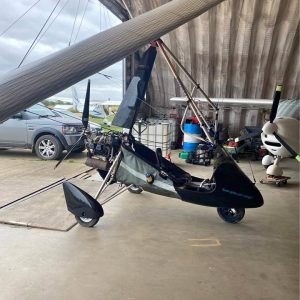
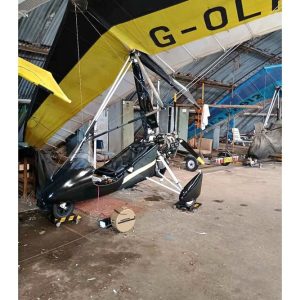
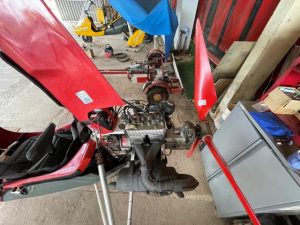
The Pegasus Quantum is a two-seat weight-shift (flexwing) microlight, built in Britain from 1996. Over 600 were made, in versions powered by the Rotax 503, 582 and 912, and for many years it was a standard training and touring trike at UK microlight schools. Pilot and passenger sit in tandem in an open trike under a flexwing, with the passenger behind.
UK buyers like it because it is cheap to buy, well understood and widely supported by instructors and inspectors. A tidy two-stroke Quantum is one of the lowest-cost ways into powered flying, while a 912-powered SuperSport is a capable, economical tourer. In the UK it is a BMAA-supported type rather than an LAA one.
History and design
Pegasus Aviation designed and built the Quantum at Marlborough in Wiltshire. In the early 2000s Pegasus merged with Mainair Sports to form P&M Aviation, and production moved to Mainair’s Rochdale factory. As P&M concentrated on its newer models, the Quantum was dropped; by 2012 the company said it was no longer in production. The Quantum made its name in 1998, when Brian Milton and Keith Reynolds flew a Quantum 912 around the world, the first microlight to do so.
Like all flexwings, it is controlled by weight shift: the pilot moves the control bar to shift the trike’s centre of gravity relative to the wing’s hang point, and roll and pitch follow. The sail is stabilised polyester reinforced with Tri-lam and Kevlar, shaped by pre-formed aluminium and composite battens in sail pockets, with luff lines that the pilot can adjust in flight to trim the cruise speed. The trike can be flown solo or dual, but the pilot must sit in the front seat when solo.
Variants
Quantum 503: the entry-level trike with a 50 hp air-cooled Rotax 503 two-stroke and no cockpit fairing.
Quantum Sport (582): a 64 hp liquid-cooled Rotax 582 two-stroke, with wheel spats and an instrument pod.
Quantum SuperSport (912): the 80 hp four-stroke Rotax 912 UL, with a full cockpit fairing and windscreen; often called the Quantum 15-912.
HKS-engined Quantum 15: a less common version with its own BMAA data sheet.
Early aircraft also used the water-cooled Rotax 462.
The BMAA publishes separate Type Acceptance Data Sheets for the Quantum 15 (BM46), Quantum 15-912 (BM50) and the HKS version (BM56). Check the sheet that matches the aircraft, as limits differ between versions.
Specifications
Published figures for the Quantum SuperSport 912. Two-stroke versions are lighter and have different limits, so always check the BMAA data sheet and the aircraft’s own Permit.
Specification
Imperial
Metric
Wingspan
34 ft 1 in
10.4 m
Wing area
168 sq ft
15.6 m²
Empty weight
450 lb
204 kg
Maximum take-off weight
902 lb
409 kg
Fuel capacity
10.8 imp gal
49 L
Engine
Rotax 912 UL, 80 hp (60 kW)
Maximum speed
78 kt (90 mph)
145 km/h
Cruise speed
52 kt (60 mph)
97 km/h
Stall speed
33 kt (38 mph)
61 km/h
Rate of climb
980 ft/min
5 m/s
Load limits
+4 / 0 g operational; +6 / −3 g ultimate
Performance and handling
A Quantum cruises at around 50–60 mph, with turns started by weight shift from about 45 mph upwards. The 912 version climbs at nearly 1,000 ft/min two-up and is noticeably smoother and more economical than the two-strokes. Two-stroke Quantums are lighter and simpler, and are popular as low-cost solo and local aircraft.
Handling is stable and predictable, which is why schools used it so widely. Like any flexwing, it relies on correct wing trim and tuning: an AAIB investigation into a 2010 accident in Bedfordshire found that the wing’s battens had been adjusted well beyond the manufacturer’s limits, leaving the aircraft in a turn the pilot could not stop. Another AAIB report, on a fatal 2007 accident, describes a tumble (a rapid uncontrolled pitch rotation) leading to in-flight break-up, a reminder that flexwings must be flown within their manoeuvre limits.
Owning one in the UK
Licence: an NPPL(M) or a PPL with a microlight class rating, with weight-shift differences training if you learned on three-axis microlights. The Quantum has been used widely for NPPL(M) training.
Permit: the Quantum flies on a Permit to Fly. UK microlight type data sheets are issued by the BMAA on behalf of the CAA, and most Quantum owners use BMAA inspectors and the BMAA’s annual Permit revalidation. It is not on the LAA’s list of accepted types.
Running costs: purchase prices are low (see below), and two-strokes are cheap to buy but need more frequent engine overhauls than a 912. The 912 burns less fuel and is the better choice for touring. Check what fuel the aircraft’s Rotax engine and Permit allow.
Storage: the wing can be de-rigged and the trike trailered, so some owners keep one at home, though most keep it rigged in a hangar to avoid rigging wear and time.
Support: P&M Aviation, now trading as Pegasus Sport Aviation, has CAA approval to continue its products and still publishes a Quantum trike parts list; its UK distributor is G S Aviation. Battens, sails and trike spares are also widely available second-hand. For a three-axis alternative, see the Rans S6 Coyote II, or browse LAA types for comparison.
Typical UK price: recent UK asking prices on aircraftsale.co.uk have run from about £2,700 for a Quantum 503 or 582 to about £9,000 for a 912, with condition, sail age and engine hours making the biggest difference.
Buying checklist
Check the sail’s age and condition and ask for any sail test records; a replacement sail is a major cost.
Check the battens against the manufacturer’s batten profile chart and ask whether they have been altered.
Inspect the keel, leading edges, A-frame and hang point for dents, corrosion and wear.
Review the engine logbook, especially hours since overhaul on two-stroke 503 and 582 engines.
Confirm which BMAA data sheet (BM46, BM50 or BM56) applies and that the aircraft matches it.
Check the Permit expiry date and the inspection record; a lapsed Permit needs re-inspection.
Look at the trike’s undercarriage, wheels, brakes and seat frames for cracking or repairs.
Fly it, or have an instructor fly it, to check that it trims straight with no persistent turn.
An NPPL(M) or a PPL with a microlight class rating, with weight-shift (flexwing) training. If you learned on three-axis microlights you will need differences training.
Is the Quantum an LAA aircraft?
No. It is a BMAA-supported microlight. Its UK type data sheets are issued by the BMAA on behalf of the CAA, and most owners use BMAA inspectors for Permit revalidation.
Is it on a Permit to Fly?
Yes. Like most UK microlights, the Quantum flies on a Permit to Fly rather than a CofA.
Which engine is best?
The Rotax 912 is smoother, more economical and better for touring. The two-stroke 503 and 582 are cheaper to buy but need more frequent overhauls.
How much does a Pegasus Quantum cost in the UK?
Recent UK asking prices have ranged from about £2,700 for a two-stroke Quantum to about £9,000 for a 912, depending on sail and engine condition.
How fast is it?
Around 50–60 mph in the cruise, with a top speed of about 90 mph for the 912 SuperSport and a stall of about 38 mph.
Can I fly solo from the back seat?
No. The pilot must sit in the front seat when flying solo, because of centre-of-gravity limits.
Is it good for training?
Yes. It was widely used by UK schools for NPPL(M) training and air experience flights, thanks to its stable, predictable handling.
Is it still made?
No. P&M Aviation ended Quantum production, and by 2012 said it was no longer in production. A Quantum trike parts list is still published by the company.
Can it be aerobatic?
No. Flexwing microlights are not aerobatic, and the operational limits are +4 g and 0 g. Exceeding the manoeuvre limits risks a tumble.
Can I keep it at home?
The wing can be de-rigged and the trike trailered, so home storage is possible, but frequent rigging adds wear and takes time.
Figures are typical published values for a standard example and vary with engine, propeller, build and modification state. Always use the aircraft’s own Pilot’s Operating Handbook, weight and balance schedule and LAA paperwork. Last checked November 2026.