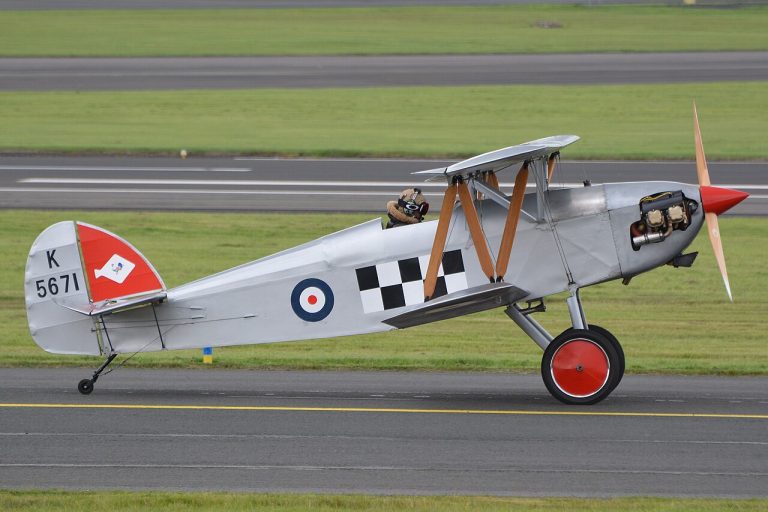
The Steen Skybolt is a two-seat aerobatic biplane built from plans, with a welded steel-tube fuselage, wooden wings and fabric covering. It is bigger and roomier than a two-seat Pitts, with a wider wing, and was designed to be both a sport aerobatic aircraft and a reasonable cross-country machine. In the UK it is an LAA Group A type, flying on an LAA Permit to Fly under type 064.
It suits pilots who want a two-seat biplane for fun aerobatics, formation and fly-ins, and who are happy with tailwheel flying and open-cockpit weather. Because every Skybolt is homebuilt, engines, canopies and equipment vary widely, so individual aircraft differ a lot in weight and performance.
History and design
Lamar Steen designed the Skybolt as an engineering project for his high-school students, and the prototype first flew in October 1970. A Skybolt was Reserve Grand Champion Custom Built at Oshkosh in 1979, and the design became a popular homebuild, with more than 400 completed from plans sold in over 29 countries, according to Wikipedia. Sixteen were on the UK register in January 2009. Plans and materials have been supplied by Steen Aero Lab in Florida, and plans and a materials kit are also sold through Aircraft Spruce.
The fuselage is welded steel tube with aluminium panels at the front and fabric behind. The wings have spruce spars, built-up wooden ribs, compression struts and wire bracing, all under fabric. A KITPLANES flight report describes a NACA 63A2015 section on the upper wing and a symmetrical NACA 0012 on the lower. The standard layout is tandem open cockpits, but some builders fit a single bubble canopy over both, and some competition aircraft are flown as single-seaters with the front cockpit closed. More detail is in the Wikipedia article.
Variants
The LAA accepts the Skybolt under a single type number, 064. The plans family includes:
Skybolt: the original plans version, designed around a 180 hp Lycoming HO-360-B1B. Wikipedia says engines from 150 to 260 hp have been fitted.
Skybolt (D): a revised structure for engines from 180 to 350 hp.
Skybolt (R): a derivative with a revised fuselage for the Vedeneyev M14P radial.
Firebolt: a later development with a slightly longer fuselage, different landing gear and a sliding canopy. Many builders mix Skybolt and Firebolt features.
Whatever the engine, check the aircraft’s LAA Operating Limitations, because the approved engine, propeller and weights are specific to each build.
Specifications
Figures are for a 180 hp Lycoming HO-360 from Airlife’s World Aircraft (Simpson, 2001, via Wikipedia), cross-checked with Plane & Pilot. Fuel capacity is from Aircraft Spruce and KITPLANES. Published maximum weights vary widely with the version, so they are given as a range.
Specification
Imperial
Metric
Wingspan
24 ft 0 in
7.32 m
Length
19 ft 0 in
5.79 m
Height
7 ft 0 in
2.13 m
Empty weight
1,080 lb
490 kg
Maximum weight (published)
1,650–1,800 lb
748–816 kg
Fuel (standard tank)
29 US gal
110 litres
Engine
Lycoming HO-360-B1B, 180 hp (150–260 hp fitted)
Maximum speed
145 mph (126 kt)
233 km/h
Cruise
130 mph (113 kt)
209 km/h
Stall
50 mph (43 kt)
80 km/h
Rate of climb
2,500 ft/min
12.7 m/s
Range
450 miles (391 nm)
724 km
Design load factors (quoted)
+12 / −10 g (Plane & Pilot)
Performance and handling
With 180 hp, the published figures suggest a cruise around 113 knots and a strong 2,500 ft/min climb, though real figures depend heavily on engine, propeller, canopy and weight. Open cockpits cost speed: KITPLANES reckons 15–18 mph compared with a canopied aircraft. Many Skybolts now carry bigger engines; the KITPLANES test aircraft had a 350 hp IO-540 and a four-blade MT propeller, and the magazine quotes fuel burns of up to 13 US gal/h with the larger engines.
The same report found light pitch forces (around 12–15 lb at 4 g on the long stick), a quick roll rate and excellent yaw stability. Slow rolls were easy to hold on heading, and snap rolls were aggressive. The stall was gentle with buffet, but a held-back stick produced a quarter-snap, which the author put down to the wing sections. Wheel landings, including in crosswinds, were practical. Spins were not tested. As with any aerobatic biplane, forward view on the ground and on final is limited, and the aircraft needs a current tailwheel pilot.
Owning one in the UK
The Skybolt is an LAA Group A aeroplane, so you need an NPPL SSEA, LAPL(A) or PPL(A), tailwheel differences training, variable-pitch propeller differences training if a constant-speed propeller is fitted, and an aerobatic rating if you hold a Part-FCL licence and want to fly aerobatics. All Skybolts are amateur-built and fly on an LAA Permit to Fly, inspected each year by an LAA inspector, with owner maintenance under LAA oversight. That keeps running costs well below those of a certified aerobatic two-seater.
The Lycoming engines are mainstream and supported by UK engine shops. Insurers will want tailwheel and aerobatic experience, preferably on biplanes. Read the LAA type data sheet for type 064 in the LAA Info Library before you buy. Skybolts come up for sale in the UK only occasionally, so there are too few recent asking prices to give a typical figure. Browse aircraft for sale and other LAA aircraft, or compare the Pitts S-2, the Christen Eagle II and the Acro Sport II.
Buying checklist
Inspect the laminated or solid spruce spars for separated laminations or cracks, and check rib glue joints and gussets.
Check flying and landing wires, their fittings and their tensions, and the compression struts.
Inspect the welded steel-tube fuselage for cracks and corrosion, especially at gear, engine mount and tank attachments.
Assess the fabric on the wings, tail and rear fuselage; covering condition has a big effect on value.
Confirm the engine model, hours since overhaul and the inverted fuel and oil systems, and that the propeller is approved for that installation.
Check any canopy, its latches and its emergency release arrangement, plus harnesses and parachutes.
Read the build file, weight and balance, and LAA Operating Limitations, including the approved g limits and maximum weight for that aircraft.
LAA type acceptance
The Light Aircraft Association lists these variants under the following type numbers. Check the LAA Type Acceptance Data Sheets (TADS) for the current approved engines, propellers and modifications before you buy.
An NPPL SSEA, LAPL(A) or PPL(A) with tailwheel differences training, plus variable-pitch differences if a constant-speed propeller is fitted and an aerobatic rating on a Part-FCL licence for aerobatics.
Is the Skybolt on a Permit or a CofA?
All Skybolts are amateur-built and fly on an LAA Permit to Fly under LAA type 064.
How many are in the UK?
Wikipedia, citing the Air-Britain register, says sixteen were registered in the UK in January 2009.
What engine does it have?
It was designed around a 180 hp Lycoming. Wikipedia says 150–260 hp engines have been fitted, and later variants take up to 350 hp or a Russian radial.
How fast is it?
With 180 hp, published figures give about 130 mph (113 kt) cruise and 145 mph (126 kt) maximum. Bigger engines go faster, and open cockpits are slower than canopied aircraft.
Is it fully aerobatic?
It was designed as an aerobatic biplane and Plane & Pilot quotes +12/−10 g design loads. Check the individual aircraft’s LAA Operating Limitations for the approved limits.
How does it compare with a Pitts S-2?
It has a bigger wing (24 ft against about 20 ft for a two-seat Pitts) and is pitched by its plans supplier as both an aerobatic aircraft and a cross-country machine. KITPLANES found its roll rate quick but not extreme.
Can I build one in the UK?
Yes. It is an LAA-accepted plans-built type, so a build is registered with the LAA and inspected in stages. Plans and materials are sold through Steen Aero Lab and Aircraft Spruce.
How far can it go?
Published range with 180 hp is 450 miles (about 390 nm) on a 29 US gallon standard tank. KITPLANES mentions an optional 38 gallon tank.
Can it have a canopy?
Yes. Some builders fit a single bubble canopy over both cockpits, and the Firebolt development has a sliding canopy.
What should I check before buying?
Wing spars and ribs, flying wires, welded fuselage joints, fabric condition, the engine’s inverted systems and the canopy release.
Figures are typical published values for a standard example and vary with engine, propeller, build and modification state. Always use the aircraft’s own Pilot’s Operating Handbook, weight and balance schedule and LAA paperwork. Last checked November 2026.