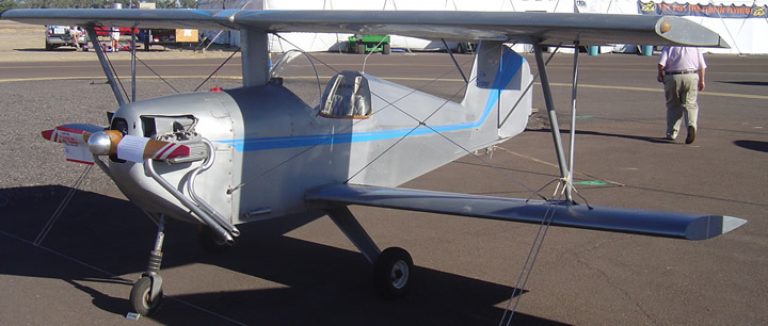
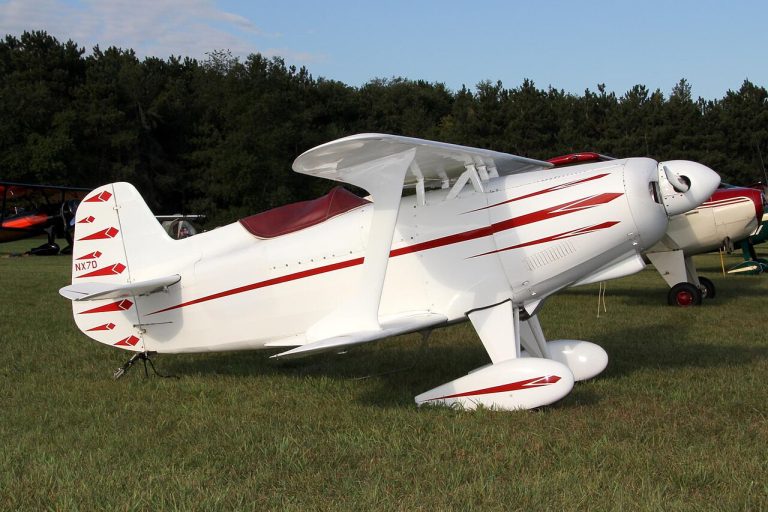
The Stits SA-3A Playboy is a single-seat, strut-braced low-wing monoplane designed by Ray Stits in 1952 for people to build at home. It has a welded steel-tube fuselage, wooden wings, fabric covering and a sliding canopy, and most examples fly behind an 85 hp Continental C85.
Its place in history is bigger than its size. The Playboy was one of the most influential designs of the post-war homebuilding boom, its prototype is in the EAA museum at Oshkosh, and a modified Playboy became Richard VanGrunsven’s RV-1, the starting point for the whole Van’s RV family. In the UK it is a very rare type on an LAA Permit to Fly, suited to a pilot who wants a simple, sporty single-seater with real vintage character.
History and design
According to Wikipedia, Ray Stits designed the Playboy and built the prototype in about three months in 1952. It was the third of his fifteen designs, which also included the tiny Stits Junior monoplane and Sky Baby biplane. Stits was the first member of EAA Chapter 1, and he later became best known for the Stits (now Poly-Fiber) fabric-covering process. The prototype passed through several owners before being donated to the Experimental Aircraft Association.
The Playboy could be built from plans or from a series of part kits. Plane & Pilot describes it as one of Stits’s most popular designs for backyard builders. The fuselage is welded steel tube, the wings are wood, and the whole aircraft is fabric covered. Unusually for a low-wing aircraft, the wing is strut-braced. Engines of 85 to 160 hp have been fitted, with the 85 hp Continental the most common.
Canada’s first licensed amateur-built aircraft was a heavily modified Playboy, now in the Canada Aviation and Space Museum, and in March 2010 Wikipedia records 41 Playboys registered in the USA, six in Canada and two in the UK.
Variants
The LAA type entry (248) covers the SA-3A. Related versions include:
SA-3A Playboy: the single-seat version with a strut-braced wooden wing, usually an 85 hp Continental C85.
SA-3B: a side-by-side two-seat version with a 115 hp Lycoming O-235; it is not the type the LAA entry names.
Super Playboy: a one-off with two-foot wing extensions and a 150 hp Franklin.
VanGrunsven RV-1: an SA-3A rebuilt with a cantilever aluminium wing and a 125 hp Lycoming O-290G, which led to the Van’s RV-3.
Specifications
Figures are for the SA-3A with a Continental C85, as given by Wikipedia (citing Plane & Pilot’s 1978 directory, the Canada Aviation Museum and the EAA museum). Individual aircraft vary widely with engine and builder. The UK figures on the LAA type data sheet were not checked.
Specification
Imperial
Metric
Wingspan
22 ft 2 in
6.76 m
Length
17 ft 4 in
5.28 m
Height
6 ft 4 in
1.93 m
Wing area
96 sq ft
8.9 m²
Empty weight
600 lb
272 kg
Gross weight
902 lb
409 kg
Fuel capacity
14 US gal
53 L
Engine
Continental C85, 85 hp (85-160 hp fitted)
Maximum speed
145 mph / 126 kt
233 km/h
Cruise
130 mph / 113 kt
209 km/h
Climb
1,050 fpm
5.3 m/s
Service ceiling
12,000 ft
3,700 m
Range
400 mi / 348 nm
640 km
Plane & Pilot’s own data block for the Playboy agrees on the 130 mph cruise, 1,050 fpm climb and 400-mile range, but lists a Continental A75, a 26 ft span and much lighter weights (700 lb gross, 430 lb empty), so check the actual figures for any aircraft you look at.
Performance and handling
With 85 hp in a small, light single-seater, the Playboy is lively: published figures give a cruise around 130 mph (113 kt) and a climb of about 1,050 fpm. Its short span and small wing area mean it is a faster, more sporting aircraft than a Cub-type single-seater, and it rewards a pilot who keeps the speeds accurate on approach. The tailwheel and narrow single-seat cockpit mean there is no way to have dual instruction in the type, so tailwheel currency on something similar is important before a first flight.
We have not found a published stall speed or Vne, so these must come from the individual aircraft’s LAA operating limitations.
Owning one in the UK
UK Playboys fly on an LAA Permit to Fly under the oversight of the Light Aircraft Association, which lists the SA-3A as Group A (type 248). You need an NPPL SSEA, LAPL(A) or PPL with an SEP rating, plus tailwheel differences training. Annual permit renewal involves an inspection by an LAA inspector and the LAA fee, which keeps costs low for a simple single-seater.
The Continental C85 is a well-understood engine with good parts support in the UK; check the aircraft’s LAA paperwork for its approved engine and fuel (avgas or mogas). The design dates from the 1950s and many examples are decades old, so the condition of the wooden wings, fabric and steel tube is the key cost driver. There is no manufacturer support today, so parts are made or sourced by the owner under LAA guidance. A hangar is strongly recommended for a wood-and-fabric aircraft.
Buying checklist
Find out the aircraft’s build history, date and engine, as these vary widely between Playboys.
Inspect the wooden wing spars, ribs and glue joints for rot, cracking or water damage, using inspection holes where fitted.
Check the wing struts and their fittings, which carry the low wing’s loads.
Look for rust in the steel-tube fuselage, especially low down and near the tailwheel.
Punch-test the fabric and check its age and covering system.
Check the sliding canopy, its rails and latch, and the emergency exit arrangement.
Confirm the approved weights and limits on the LAA paperwork, since published figures disagree.
The Light Aircraft Association lists these variants under the following type numbers. Check the LAA Type Acceptance Data Sheets (TADS) for the current approved engines, propellers and modifications before you buy.
Figures are typical published values for a standard example and vary with engine, propeller, build and modification state. Always use the aircraft’s own Pilot’s Operating Handbook, weight and balance schedule and LAA paperwork. Last checked November 2026.