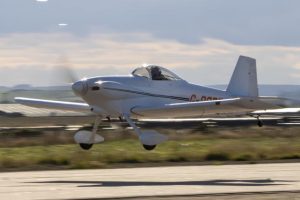
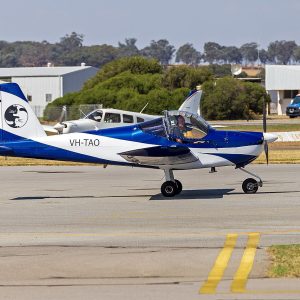
The Van’s RV-3 is the original single-seat RV, introduced in 1971: a small, all-metal, tailwheel monoplane with a bubble canopy, a four-cylinder Lycoming and a cruise of around 170 knots on 150 hp. The two-seat RV-4 was developed from it, and in the UK it flies on an LAA Permit to Fly as a Group A aeroplane under type 099.
It suits solo pilots who want a fast, economical sport aircraft that can also fly aerobatics once the wing is up to standard. UK buyers like it because it costs less to buy and run than a two-seat RV, but the wing history means every purchase should start with the question of which spar is fitted.
History and design
Richard VanGrunsven designed the RV-3 in the late 1960s, after flying a Stits Playboy, with the aim of keeping that layout while improving every part of it. It was introduced in 1971, won Best Aerodynamic Detailing at the 1972 EAA Oshkosh convention, and became the basis for the two-seat RV-4. The airframe is light alloy with a glassfibre cowling, conventional tailwheel gear and Cleveland brakes.
Van’s suspended new RV-3 sales in 1996 because of structural concerns with the original wing. In March 1996 Van’s recommended limiting earlier aircraft to 4.4 g (utility category) and prohibiting aerobatics until the spar was modified under Change Notice CN-301 or a new wing fitted, with a placard and logbook entry. Van’s then designed a new wing with a four-piece, gold-anodised spar, and kits returned as the RV-3B. The empennage, fuselage and finishing kits were essentially unchanged. Wikipedia, citing Van’s first-flights list, put the number completed and flown at 305 by February 2023. See the Van’s RV-3 page and the Wikipedia article for the background.
Variants
RV-3 (LAA 099): the original aircraft with the first-generation wing. Unless CN-301 has been done or a new wing fitted, Van’s recommends a 4.4 g limit and no aerobatics.
RV-3A: in RV-3 terms this is not a nosewheel model. It is an early RV-3 with the rear spar and wing root upgrades described in Van’s CN-1.
RV-3B: built with, or retrofitted with, the new Van’s wing. Retrofit spars have some holes left undrilled for matching to the existing aircraft, and fitting one also means replacing the fuselage centre section. The new wing tanks hold 15 US gallons each side.
Engines range from 100 to 160 hp, with fixed-pitch or constant-speed propellers; Van’s published data is for 125 hp and 150 hp with a fixed-pitch wooden prop.
Specifications
Van’s Aircraft figures for the RV-3B. Performance is at a solo weight of 1,050 lb with a fixed-pitch wooden propeller; speeds were published in mph and are converted to knots.
Specification
Imperial
Metric
Wingspan
19 ft 11 in
6.07 m
Length
19 ft
5.79 m
Height
5 ft
1.52 m
Wing area
90 sq ft
8.4 m²
Empty weight (depends on electrical system)
703–750 lb
319–340 kg
Gross weight
1,100 lb
499 kg
Useful load (calculated)
350–397 lb
159–180 kg
Baggage
30 lb
14 kg
Fuel capacity
30 US gal (25 imp gal)
114 litres
Engine
Lycoming, 100–160 hp (Wikipedia’s figures are for a 150 hp O-320)
Propeller
Fixed-pitch or constant-speed
Top speed, 125 hp / 150 hp
195 / 207 mph (169 / 180 kt)
314 / 333 km/h
Cruise, 75% at 8,000 ft, 125 hp / 150 hp
185 / 196 mph (161 / 170 kt)
298 / 315 km/h
Cruise, 55% at 8,000 ft, 125 hp / 150 hp
166 / 176 mph (144 / 153 kt)
267 / 283 km/h
Stall
51 mph (44 kt)
82 km/h
Rate of climb, 125 hp / 150 hp
1,700 / 2,050 ft/min
8.6 / 10.4 m/s
Take-off distance, 125 hp / 150 hp
350 ft / 300 ft
107 m / 91 m
Landing distance
350 ft
107 m
Range, 75% at 8,000 ft, 125 hp / 150 hp
640 / 595 statute miles (556 / 517 nm)
1,030 / 958 km
Service ceiling, 125 hp / 150 hp
20,500 / 23,500 ft
6,250 / 7,160 m
Performance and handling
On 150 hp Van’s quotes 196 mph (170 kt) at 75% power and 8,000 ft and a climb of over 2,000 ft/min solo. Even the 125 hp figures, 185 mph (161 kt) and 1,700 ft/min, are fast for a single-seater of this size, and a stall of about 44 knots gives short take-off and landing distances of around 100 metres on Van’s figures. Plane & Pilot’s figures for an earlier 125 hp RV-3 are similar: 185 mph cruise and a 48 mph stall.
The RV-3 is a small, light tailwheel aircraft with a short fuselage, so it suits current tailwheel pilots, and with only one seat there is no dual conversion in type. How much aerobatic flying it can do depends on the wing: Van’s limits unmodified early wings to 4.4 g with no aerobatics, so the RV-3B wing or CN-301 modification matters as much to the flying as to the value.
Owning one in the UK
The RV-3 is an LAA Group A aeroplane, so you need an NPPL SSEA, LAPL(A) or PPL(A), tailwheel differences training, and an aerobatic rating if you hold a Part-FCL licence and want to fly aerobatics. There is no second seat, so your first flight in type will be solo; time in a two-seat RV-4 or RV-8 is the closest preparation. UK aircraft fly on an LAA Permit to Fly under type 099, revalidated each year after inspection by an LAA inspector, which keeps running costs low for a 150 hp aircraft.
Four-cylinder Lycomings are common engines with plenty of overhaul options. Check which fuels the aircraft’s engine is approved for. Van’s still lists an RV-3 page and says limited production means long lead times, but its July 2026 kit price list says RV-3 kits are no longer available, so check with Van’s before planning a new build or a wing retrofit. We have not confirmed a UK agent. Read the LAA type data sheet for type 099 in the LAA Info Library for the UK requirements on the wing.
Establish which wing is fitted: original RV-3, RV-3A (CN-1), CN-301 modified, or the new RV-3B wing. Get the paperwork and the LAA approval for any modification or retrofit.
If the original wing is unmodified, check the 4.4 g placard and logbook entry and expect no aerobatics.
Check the LAA Operating Limitations for the g limits and whether aerobatics are permitted.
Get the weighed empty weight; with a 1,100 lb gross there is little margin for a heavy pilot, full fuel and baggage.
Confirm the engine model and power, its hours and overhaul history, and the propeller type and condition.
Inspect the tailwheel spring, tailwheel and brakes for signs of ground-loops or hard landings.
Ask for the build log and history, and whether it has ever been flown hard aerobatically.
LAA type acceptance
The Light Aircraft Association lists these variants under the following type numbers. Check the LAA Type Acceptance Data Sheets (TADS) for the current approved engines, propellers and modifications before you buy.
It is an LAA Group A aeroplane, so an NPPL SSEA, LAPL(A) or PPL(A) with tailwheel differences training. As a single-seater, your first flight in type will be solo.
Is the RV-3 on a Permit or a CofA?
UK RV-3s fly on an LAA Permit to Fly under type 099, revalidated each year after an LAA inspection.
What was the problem with the RV-3 wing?
Van’s suspended sales in 1996 over structural concerns with the original wing. It recommends a 4.4 g limit and no aerobatics until the spar is modified under CN-301 or the new RV-3B wing is fitted.
What is an RV-3B?
An RV-3 built with, or retrofitted with, Van’s redesigned wing and four-piece spar. The rest of the airframe is essentially the same.
Is an RV-3A a nosewheel version?
No. Unusually for Van’s, the RV-3A designation means an early RV-3 with the rear spar and wing root upgrades in CN-1. All RV-3s are tailwheel.
Can it fly aerobatics?
Only if the wing is up to standard. Check that the CN-301 modification or RV-3B wing is fitted and what the LAA Operating Limitations allow.
How fast is it?
Van’s quotes 196 mph (170 kt) at 75% power and 8,000 ft with 150 hp, and 185 mph (161 kt) with 125 hp.
How far can it go?
Van’s quotes 595 statute miles (517 nm) at 75% with 150 hp on 30 US gallons, before reserves.
Can I still buy a kit?
Check with Van’s. The RV-3 page talks of long lead times, but the July 2026 kit price list says RV-3 kits are no longer available.
How many were built?
Wikipedia, citing Van’s, gives 305 RV-3s completed and flown by February 2023.
Is it good for touring?
For one person, yes. It is fast and economical, but baggage is limited to 30 lb.
Figures are typical published values for a standard example and vary with engine, propeller, build and modification state. Always use the aircraft’s own Pilot’s Operating Handbook, weight and balance schedule and LAA paperwork. Last checked November 2026.