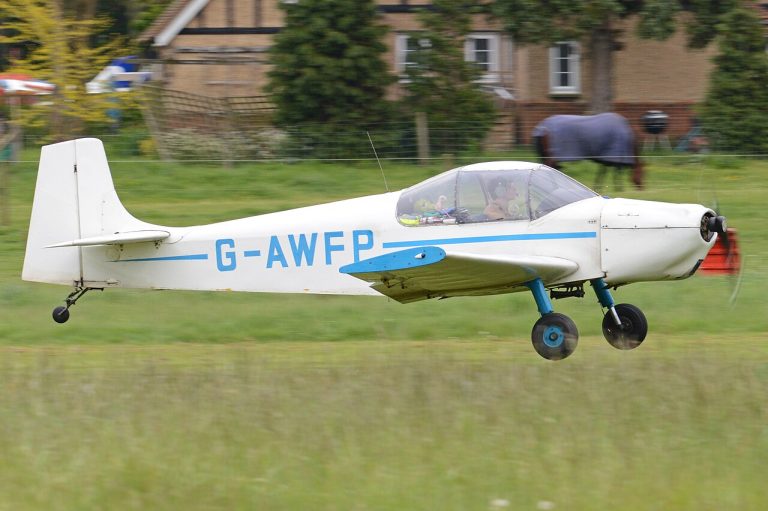
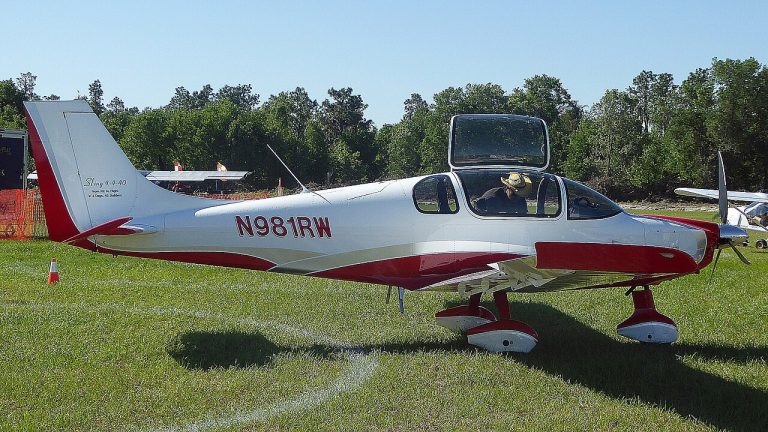
The Fisher Super Koala is a two-seat, high-wing kit aircraft that deliberately looks like a scaled-down Piper J-3 Cub, but seats its two occupants side by side. It is built almost entirely of wood, covered in fabric, and powered by a Rotax two-stroke, with an empty weight of only about 400 lb (181 kg).
In the UK it is a rare homebuilt on an LAA Permit to Fly. It suits a pilot who wants Cub-style low-and-slow flying, short-field ability and low purchase and running costs, and who is comfortable with a two-stroke engine. As with any kitplane, the quality of the individual build matters more than the type.
History and design
Fisher Flying Products, originally of Edgeley, North Dakota and now based in Dorchester, Ontario, designed the Super Koala in the early 1980s; Wikipedia gives the first flight as 1982 or 1983. It shares its name with Fisher’s earlier single-seat FP-202 Koala but is a separate two-seat design, and was aimed at the US homebuilt category. Kitplanes reported 105 completed by 2011.
The structure is unusual: the fuselage is built from thin wood strips in a geodesic pattern, which Fisher says gives a strong, light airframe with redundant load paths. The strut-braced wing has jury struts and flaps as standard, the whole airframe is covered in doped fabric like the Cub, and the bungee-sprung main gear is paired with a steerable tailwheel. Brakes are optional. Fisher claims an average builder needs about 500 hours to finish one.
Variants
The LAA lists one type entry (228). The main difference between examples is the engine:
Rotax 503: 50-52 hp air-cooled two-stroke, with a lower manufacturer gross weight of 740 lb (336 kg).
Rotax 582: 64 hp liquid-cooled two-stroke, with a gross weight of 830 lb (376 kg) and better climb.
The UK maximum weight for each version is set on the LAA type data, which we have not been able to check, so confirm it on the aircraft’s own paperwork.
Specifications
Figures are for the Rotax 582 version, from the manufacturer’s data as quoted by Wikipedia and cross-checked with the Fisher specification table published by LightSport Aircraft News, unless noted.
Specification
Imperial
Metric
Wingspan
31 ft 0 in
9.45 m
Length
18 ft 1 in
5.51 m
Height
5 ft 7 in
1.70 m
Wing area
140 sq ft
13 m²
Empty weight
375-400 lb
170-181 kg
Gross weight (Rotax 582)
830 lb
376 kg
Gross weight (Rotax 503)
740 lb
336 kg
Engine
Rotax 582, 64 hp (Rotax 503, 50-52 hp, optional)
Never-exceed speed
95 mph / 83 kt
153 km/h
Cruise
70-80 mph (61-70 kt)
113-129 km/h
Stall, with flaps
29-32 mph (25-28 kt)
47-51 km/h
Climb at gross
1,100 fpm
5.6 m/s
Take-off run at gross (LightSport Aircraft News)
150 ft
46 m
Landing roll at gross (LightSport Aircraft News)
250 ft
76 m
Design load limits
+4 / -2.2 g (Rotax 582)
Fuel capacity is quoted as 10 US gal by Wikipedia and 8 gallons by the specification table, so check the tank fitted to the aircraft you are looking at.
Performance and handling
The Super Koala is a low-and-slow aircraft in the Cub tradition. It cruises at around 70-80 mph, depending on load, with a never-exceed speed of only 95 mph, so this is a local flying and farm-strip aeroplane rather than a tourer. The light airframe and 64 hp give a strong climb of around 1,100 fpm at gross, and the flapped stall below 30 kt allows very short take-off runs and landing rolls of about 150-250 ft in the manufacturer’s figures.
A low wing loading also means the aircraft will be affected by gusts and turbulence, so it is best enjoyed in calm conditions. The tailwheel and light weight call for proper tailwheel training and care in crosswinds.
Owning one in the UK
UK Super Koalas fly on an LAA Permit to Fly, overseen by the Light Aircraft Association, which lists it as Group A (type 228) rather than as a microlight. That means you need an NPPL SSEA, LAPL(A) or PPL with an SEP rating, not an NPPL(M), plus tailwheel differences training. Annual permit renewal involves an inspection by an LAA inspector and the LAA fee, which keeps running costs low.
The Rotax 503 and 582 are two-stroke engines that need oil mixed with the fuel (or an oil-injection system) and more frequent maintenance than a four-stroke; check the fuel clearance (mogas or avgas) on the aircraft’s LAA paperwork. UK Rotax dealers and service centres can support them, but check the engine’s hours, the gearbox and the cooling system on a 582. Fisher Flying Products is now listed as part of the CKD Aero group, which still promotes the Super Koala. Fabric and wooden structures benefit from hangar storage.
Buying checklist
Check the engine type, hours and maintenance records, including decarbonisation and gearbox servicing on a two-stroke.
Inspect the geodesic wooden fuselage for glue failures, rot or damage, especially near the tail and undercarriage attachments.
Punch-test the fabric and look for UV damage and cracking dope.
Check the wing struts, jury struts and their fittings, and the flap mechanism.
Look at the bungee main gear, tailwheel steering and brakes if fitted.
Confirm the approved MTOW, engine and propeller on its LAA paperwork.
Weigh the actual useful load against your own weight and your passenger’s.
The Light Aircraft Association lists these variants under the following type numbers. Check the LAA Type Acceptance Data Sheets (TADS) for the current approved engines, propellers and modifications before you buy.
An NPPL SSEA, LAPL(A) or PPL with a single-engine piston rating, plus tailwheel differences training. The LAA lists it as Group A, not as a microlight.
Can I fly it on a microlight licence?
No. Although it is light, the LAA classes the Super Koala as Group A, so an NPPL(M) does not cover it.
Is it on a Permit or a CofA in the UK?
UK examples fly on an LAA Permit to Fly. The LAA lists the type as Group A under type number 228.
What engine does it use?
A Rotax 582 (64 hp) or Rotax 503 (50-52 hp), both two-stroke engines with a reduction gearbox.
How fast does it cruise?
About 70-80 mph (61-70 kt), depending on load, with a never-exceed speed of 95 mph (83 kt).
What is the fuel burn?
We have not found a fuel-burn figure in clearly stated units from a reliable source, so check the owner’s records for the individual aircraft.
Is it a tailwheel aircraft?
Yes. It has bungee-sprung main gear and a steerable tailwheel, so tailwheel differences training is needed.
Is it good for short strips?
Yes. Manufacturer figures give take-off runs of about 125-150 ft and landing rolls of 200-250 ft, with a flapped stall under 30 kt.
Can I build one in the UK?
Yes, as an LAA project. Kits come from Fisher Flying Products, now based in Ontario, Canada and part of the CKD Aero group, so check current availability; Fisher estimates about 500 building hours.
Who supports it in the UK?
There is no UK dealer. The LAA handles Permit oversight, Fisher Flying Products (CKD Aero) is the design holder, and UK Rotax service centres can maintain the engine.
Can it tour to France?
It is better suited to local flying: the cruise is slow, Vne is only 95 mph and fuel capacity is around 8-10 gallons.
Figures are typical published values for a standard example and vary with engine, propeller, build and modification state. Always use the aircraft’s own Pilot’s Operating Handbook, weight and balance schedule and LAA paperwork. Last checked November 2026.