± 13 L/hr (3.4 US gal/hr)Estimate from engine type (Continental A-65, typical cruise); not verified
Figures marked estimate are approximate, worked out from the engine type or typical values. They have not been checked against the aircraft’s own documents, so don’t use them for flight planning. Check the Pilot’s Operating Handbook or Operating Limitations of the aircraft you are buying.
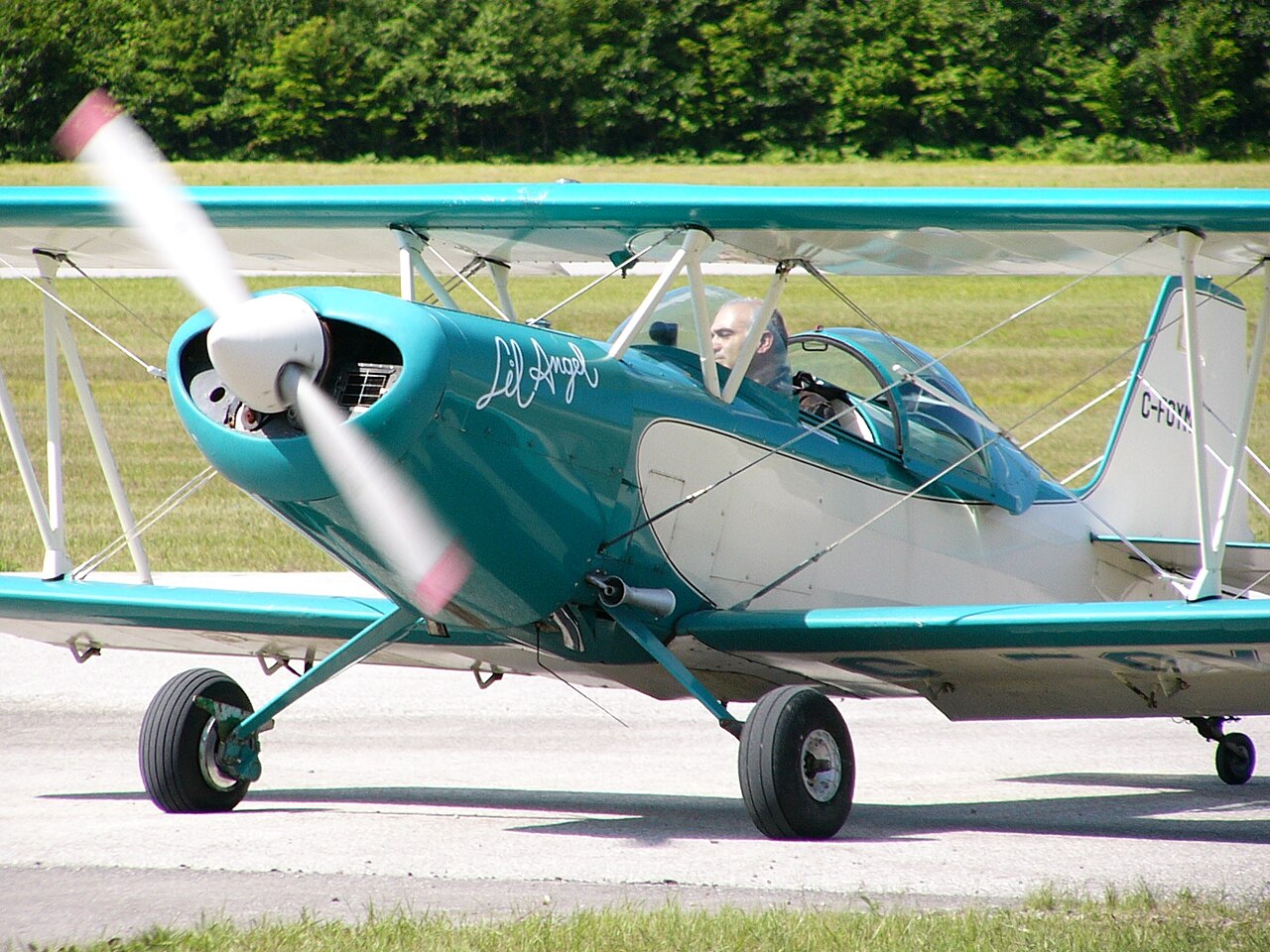
The Smith DSA-1 Miniplane is a small single-seat biplane designed in the 1950s for amateur builders. DSA stands, informally, for ‘Darned Small Aeroplane’. It has a welded steel-tube fuselage, spruce and fabric wings with ailerons only on the lower wing, and usually a small Continental or Lycoming flat-four. In the UK the LAA accepts it as a Group A aeroplane on a Permit to Fly.
It suits a tailwheel pilot who wants open-cockpit biplane fun in a very small, simple package. It is not a serious competition aerobatic machine, but it will loop and roll. It is a rare type in the UK, so keep an eye on our aircraft listings and other LAA aircraft.
History and design
Frank Smith built the prototype himself, and Wikipedia gives its first flight as 29 October 1956. Smith died of a heart attack soon after finishing it, and his wife Dorothy and son Donald carried on selling plans into the 1970s. Donald also worked on a two-seat version. Wikipedia, citing Jane’s, says 350 sets of plans had been sold by 1977. In the late 1990s Sky Classic Aircraft of Des Moines, Iowa, produced an updated Sport Miniplane with more cockpit room, a new aerofoil and redrawn plans, followed by the Miniplane 2000 with a slightly longer and wider fuselage. The prototype is in the EAA museum at Oshkosh.
The design is a single-bay biplane with staggered wings of unequal span, N-struts and wire bracing. In a 1970 Air Progress flight test, republished on Airbum.com, Budd Davisson described straight, square wings with identical truss ribs built from spruce strips, and an upper wing simple enough to build on a large table, because there are no ailerons in it. The original had a rigid undercarriage; many builders have added sprung gear. The cockpit is open, though many have been fitted with canopies.
Variants
DSA-1 Miniplane (LAA 236): Frank Smith’s single-seater, the only version the LAA lists. Builders have used Continental A65 (65 hp) and C85 (85 hp) and Lycoming O-235 (100–125 hp) engines, according to Wikipedia.
Miniplane +1: Donald Smith’s two-seat development. Not listed by the LAA.
Sport Miniplane and Miniplane 2000: Sky Classic’s updated versions, with more room and a revised aerofoil. Not listed separately by the LAA, so ask the LAA about any example built to these plans.
Specifications
Figures are for the DSA-1 prototype with a 108 hp Lycoming O-235-C, from Jane’s All the World’s Aircraft 1977–78 and Plane & Pilot 1978 as quoted by Wikipedia. Most Miniplanes have different engines and equipment, so treat these as a guide and check the aircraft’s own Permit operating limitations.
Specification
Imperial
Metric
Wingspan
17 ft 0 in
5.18 m
Length
15 ft 3 in
4.65 m
Height
5 ft 0 in
1.52 m
Wing area
100 sq ft
9.29 m²
Empty weight
616 lb
279 kg
Gross weight
1,000 lb
454 kg
Engine (prototype)
Lycoming O-235-C, 108 hp
Maximum speed
135 mph (117 kt)
217 km/h
Cruise
122 mph (106 kt)
196 km/h
Stall
56 mph (49 kt)
90 km/h
Climb
1,600 ft/min
8.1 m/s
Service ceiling
13,000 ft
3,960 m
Climb speed (Air Progress, 85 hp)
85 mph (74 kt)
137 km/h
Approach speed (Air Progress, 85 hp)
about 85 mph (74 kt)
137 km/h
Performance and handling
Davisson flew a C85-powered example and found the ailerons quick and light, the rudder very powerful and the elevator ample, with no adverse yaw. It climbed at 85 mph at about the rate of a Piper Cherokee 140 and cruised at around 100 mph. The stall was very docile: power off, it would mush along with the stick fully back. It looped and aileron-rolled well, though loops needed the right entry speed and g, and he found it reluctant to snap-roll. Fuel venting under negative g put him off slow rolls.
On the ground it needs attention. Davisson found it kept him busy on take-off, reacting instantly to small rudder inputs, and warned that it sank quickly in the flare, so he flew it on with some power and rounded out close to the ground. He suggested good crosswind tailwheel experience before flying one, and said it might be a handful on hard runways. He also stressed that every homebuilt Miniplane flies a little differently.
Owning one in the UK
Licence: an LAA Group A type, so an NPPL SSEA, LAPL or PPL, plus tailwheel differences training. Your first flight on type is solo.
Permit to Fly: UK Miniplanes fly on LAA Permits, with an annual inspection and permit renewal through an LAA inspector. See the LAA.
Aerobatics: what an individual aircraft may do is set by its Permit operating limitations, so check them before any aerobatic flying.
Engine and fuel: engines vary from 65 hp to 125 hp. Check the fuels approved in the operating limitations.
Hangarage: the 17 ft span takes little hangar space.
Plans and support: the EAA lists Sky Classic Aircraft as the plans supplier, but we could not confirm current availability. UK support comes from LAA Engineering and LAA inspectors.
Related types: compare other small single-seat biplanes such as the Pitts S-1 or the British Currie Wot.
Buying checklist
Identify the engine, its hours, and how much it differs from the prototype’s.
Check the undercarriage type (rigid or sprung) and its condition.
Have the wooden wings, struts, bracing wires and fittings inspected.
Check the steel-tube fuselage for corrosion under the fabric.
Check the fuel system and tank venting, especially if you plan aerobatics.
Check the weight schedule and whether you fit the cockpit.
Read the Permit operating limitations for any aerobatic clearance.
LAA type acceptance
The Light Aircraft Association lists these variants under the following type numbers. Check the LAA Type Acceptance Data Sheets (TADS) for the current approved engines, propellers and modifications before you buy.
It is an LAA Group A aeroplane, so an NPPL SSEA, LAPL or PPL, with tailwheel differences training. Your first flight on type is solo.
Is it on a Permit or a CofA?
UK examples fly on LAA Permits to Fly, inspected annually by an LAA inspector.
What engine does it have?
Usually a Continental A65 or C85, or a Lycoming O-235 of 100–125 hp. The prototype in Jane’s had a 108 hp O-235-C.
How fast is it?
Jane’s gives a 122 mph (106 kt) cruise for the 108 hp prototype. Budd Davisson’s 85 hp test aircraft cruised at about 100 mph.
Is it aerobatic?
It loops and rolls, but it is not a competition aerobatic machine. Check the individual aircraft’s Permit limitations for what it is cleared to do.
Is it hard to land?
Air Progress found it docile in the air but lively on the ground, with a powerful rudder, so good tailwheel experience is important.
Does it have a canopy?
The original is open-cockpit, but many have been fitted with canopies.
Can I build one?
Plans have been sold since the 1950s and the EAA lists Sky Classic Aircraft as the supplier, but current availability is not confirmed. A UK build would be an LAA project.
How many were built?
Wikipedia, citing Jane’s, says 350 sets of plans had been sold by 1977. It does not give a number completed.
Is it good for touring?
Not really. It is a small open-cockpit single-seater with little baggage space, best for local flying.
What should I check?
The engine, undercarriage, wooden wings and rigging, steel-tube fuselage, fuel system and the Permit limitations.
Figures are typical published values for a standard example and vary with engine, propeller, build and modification state. Always use the aircraft’s own Pilot’s Operating Handbook, weight and balance schedule and LAA paperwork. Last checked November 2026.